Where Am I Pointing?

1One of the beautiful things about the Church is all of the different ways it expresses its worship in music around the world, in different cultures, in different denominations, with different instrumentation, and with different opinions about how it should be done. It’s a wonderful expression of the unsearchable greatness of God (Psalm 145:3).

And even though this breadth of worship expressions can make it hard for worship leaders across the spectrum to talk principles and practicalities, I do think there is one question that gets to the heart for all worship leaders, regardless of their culture, denomination, instrumentation, and technique.

That question is: “where am I pointing?

The local worship leader with a team of two musicians (one of whom can’t play in 5 keys). The underground worship leader playing some songs off of her iPod. The mega-church worship leader with five weekend services, three weekly production meetings, two full dress rehearsals, and an all-paid band. The organist who chooses hymns according to the lectionary, and selects anthems for a small but good choir to sing. All very different churches. All with different challenges and responsibilities for their respective worship leader/organist/choir director. But in each of those churches, the person responsible for leading the worship in song has to decide where to point. 

And the kicker is that any moving object can only move in the direction it’s pointing. Try walking in multiple directions at once. Try driving on multiple roads at the same time. It’s logistically, physically, and literally impossible. You can only move in one direction at a time. So when a worship leader is planning and leading a service, in whatever context and with whatever style, he can choose to point towards Jesus, or to point away from Jesus. You can’t point away from Jesus and point towards Jesus at the same time. You can’t exalt yourself and exalt Jesus at the same time. It’s impossible.

I’m afraid that some worship leaders across the broad spectrum of worship expressions think it’s possible, permissible, and even preferable to point to themselves, their music, their style, their personality, their instrumentation, their professionalism, their polish, and their performance. There’s a word for this, and it’s called “mission creep“, and it’s what happens when we forget our original mission’s goals and move in other directions.

All worship leaders, and I’m preaching just as loudly to myself here, need a constant reminder: No. It is not OK to point to yourself. By doing so, you are pointing away from Jesus, and vainly seeking after a share of the glory he is due. Our mission has one aim: the exaltation of Jesus Christ.

Who am I to say that worship leaders have one aim? Don’t blame me. Blame Paul.

(Jesus) is the image of the invisible God, the firstborn of all creation. For by him all things were created, in heaven and on earth, visible and invisible, whether thrones or dominions or rulers or authorities—all things were created through him and for him. And he is before all things, and in him all things hold together. And he is the head of the body, the church. He is the beginning, the firstborn from the dead, that in everything he might be preeminent. (Colossians 1:15-18)

That. In. Everything. He. Might. Be. Preeminent (ie. totally, completely, unmistakably above all other things). Where is there wiggle room in this? Where is there grey? Where is there room for me to exalt myself? There isn’t.

Jesus is the image of the Father. He’s glorified by the Spirit (John 16:14). He “upholds the universe by the word of his power” (Hebrews 1:3). Is he the center of our worship services? He either is or he isn’t. We’re either pointing to him or we’re not. Regardless of our musical expression, context, stye, technique, approach, or denomination, we have this one question to answer. And it’s not multiple choice.

Performing A Role Or Performing A Show? Looking At The Fruit

1Yes, we’re all performers. 

The stay-at-home Mom performs her duties as well as she can on as little sleep as she gets. The mechanic performs his duties with the tools and training he’s gained through the years.

And the worship leader performs his or her Sunday duties on a platform of some kind, with musicians and vocalists of some kind, with training and (hopefully) practice of some kind. So, yes, worship leaders and their teams are performers, in one sense of the word.

But the word “perform” can mean two things: First, do a job. Second, put on a show. It’s the second meaning of the word that worship leaders have to avoid. We have to perform a role (which has both musical and pastoral components) focusing a congregation on Christ, without performing a show, focusing a congregation on us. It’s a fine line. And it’s a crucial distinction to make.

DISTINCTION ONEOur role is to serve our congregation by performing our role of helping them see and savor (and sing to) Jesus Christ.

– This requires pastoral gifts and sensitivities (i.e. knowing, loving, and serving our people).

– It requires musical skill (i.e. choosing songs, directing musicians, running rehearsals, and leading music).

– It requires leadership gifts (i.e. working with volunteers, arranging a team, interacting with different kinds of people, and leading a congregation in singing).

– And finally, it requires a certain comfort level with being up front, being seen, and being heard, in order to ensure the congregation’s confidence in singing to Jesus.

– All of these pastoral, musical, leadership, and up-front gifts go into us performing our Sunday morning role as a worship leader, facilitating the corporate exaltation of Jesus Christ.

DISTINCTION TWOOur role is not to entertain our congregation by performing a show (that they are welcome to follow along to if they can, or just observe).

– This diminishes the pastoral component of our role, since entertaining a crowd allows us to be more removed from the people.

– This disproportionately elevates musical skill to being the primary ingredient in the mix, since the demand is not so much on facilitating congregational singing, but more on keeping them entertained.

– This de-emphasizes pastoral/musical leadership, and instead demands a certain degree of star-power necessary to carry a musical performance from week to week.

– And this exalts the up-front persona, or stage presence, as being less about facilitating congregational singing, and more about performing the songs well.

– This is not the description of a worship leader performing his role. It’s the description of someone performing a show.

CRUCIAL DISTINCTION:
(1) Performing the different aspects of our role with humility, excellence, and skill, for the sake of building up of a congregation into Christ and helping them sing TO Christ, is effective worship leading. The fruit is that people focus on Jesus.

(2) Performing a sequence of songs in front of a congregation in a way that leads them to focus on the performance and the performers, is effectively performancism. The fruit is that people focus on the performers.

Of course we can’t help if someone, or let’s say a whole congregation, just happens to want to focus on us, even though our heart is absolutely in the place of performing a worship leading role. Every worship leader experiences leading a group of people who just aren’t responsive, no matter how hard they try or how much they pray.

But we can help what kind of fruit we’re planting.

If you want to grow apples, plant an apple tree. And take care of that apple tree. It might not grow apples for a long time. But eventually, if you planted it right, it will grow the right kind, and right flavor, of fruit.

Same goes for worship leaders. If we want people to look at Jesus, then plant that fruit. If we want people to look at us, then plant that fruit. We decide what kind of fruit to plant.

But God will only water one kind of fruit. The other kind will shrivel up and die.

Four Wrong Turns On The Road To Performancism

1The evangelical church is at a worship crossroads.

A generation of older, baby-boomer, not-so-hipster worship leaders are in the last decade or two of their full-time ministry. And a new generation of younger, Generation X, youthfully vigorous worship leaders have taken (or are about to take) the wheel. They are determining the trajectory of worship in music all around the world and will be at the helm for the next 20-30 years.

As a card-carrying member of this generation, I say that we have some very important decisions to make. Can this trend towards performancism be reversed? Can we spend “our turn” stewarding our ministries in such a way that orients the worship of the church more strongly towards the glory of God in Jesus Christ and away from the performance of the people on stage?

It’s important to know the wrong turns that have led much of the evangelical worship world to where it is today: embracing a trend of performancism in worship.

Wrong turn # 1: Away from substance
The message really does matter. The means matter, but when the means become the message, or obscure the message, and when this is OK with us, we have lost our bearings. Sadly, too many in the evangelical worship world have lost their bearings, and the style is predominant, while the substance is subordinate. Our message is the gospel. The good news of Jesus Christ. The only hope for the world.

In our different contexts, we can and should use any musical means we can to exalt him. But it must always be about exalting him. Is the message crystal clear? Let’s not settle for obscurity. We must ensure that Jesus (the substance) is always front and center, and the music (the style) is always pointing to, magnifying, proclaiming, exalting, and celebrating him. We can’t turn away from this.

Wrong turn # 2: Away from congregational singing
One of the most stunning descriptions of worship in heaven comes in Revelation 5:11-13 when John says that he “looked, and… heard around the throne and the living creatures and the elders the voice of many angels, numbering myriads of myriads and thousands of thousands, saying with a loud voice, ‘Worthy is the Lamb who was slain, to receive power and wealth and wisdom and might and honor and glory and blessing!’ And I heard every creature in heaven and on earth and under the earth and in the sea, and all that is in them, saying, ‘To him who sits on the throne and to the Lamb be blessing and honor and glory and might forever and ever!‘”

Not only is the substance of the worship in heaven crystal clear, but the sound of countless voices worshipping “him who sits on the throne and… the Lamb” together is crystal clear as well. How about in our churches?

Worship leaders: we are tragically losing our priority for congregational singing, under the guise of offering people an “experience”. What people need to experience during corporate worship is the corporate praising of Jesus. There is no greater experience to offer people than to stand among others who are lifting their hearts and voices in praise. As wonderful as good effects, art, lighting, arrangements, videos, buildings, liturgy, and pipe organs are, they pale in comparison to the sound of human voices lifted together in worship of God. A worship leader who doesn’t cultivate a singing congregation over time isn’t fulfilling the number one most important part of his job.

If we continue to settle for offering people worship “experiences” and settling for lackluster or even non-existent singing, we are setting evangelical worship on a sure course towards a crash into a wall of flashy, unsatisfying performances. We must lead with a invitational, pastoral heart to draw others in to singing praise with all of heaven. The best kind of “congregational experience” is congregational singing.

Wrong turn # 3: Away from the gospel
I’ve sat through entire church services, listened to entire worship albums, and attended entire conference sessions where the gospel is assumed, not proclaimed, as if everyone in the room has heard the gospel before, has that box checked, and except for when it pops up in a popular song, we don’t really need to emphasize that whole gospel thing very much.

Practically, the gospel assumed is the gospel omitted. Worship leaders, we have a responsibility to our congregations to ensure the centrality of the gospel in our worship services.

It’s Jesus’ “streams of mercy, never ceasing” that “call for songs of loudest praise”. It’s Jesus alone who makes a way for us to “with confidence draw near to the throne of grace” (Hebrews 4:16). Christ-centered worship isn’t just a trendy new worship catchphrase. It’s our reality. And we can either choose to center our worship around the good news of Jesus Christ, or we can choose not to. Something will be at the center. What will that “something” be?

When the core is compromised, all the branches are compromised. The core must be the gospel. Must. Must. Must.

Wrong turn # 4: Towards the performers
When you’ve lost your substance, when no one is singing along, and when you’re not centered around the gospel, you gravitate towards hiring/elevating a performer as your worship leader, making him into a mini-celebrity, maybe putting his face on the big screen, and hoping he gets your congregation to worship.  The performer/celebrity worship leader phenomenon is troubling and dysfunctional, but it’s a symptom of much deeper problems, and previous “wrong turns” that led to this place.

And this is what has now bubbled up to the surface. Performancism, which requires performers to perpetuate Sunday morning worship performances. But under the surface are deeper issues, and significant wrong turns. We need to commit to addressing the underlying issues, and then we’ll begin to see a change above the surface.

Final thoughts
Lest any of what I’ve written be construed as exclusively relevant to contemporary churches with drums and guitars, let me say loud and clear that formal, high-church, liturgical churches with organs and choirs are just as prone to performancism. The performance of an organist, the offerings of a choir, the recitation of a liturgy, the sacred movements of the clergy and acolytes can all become the same kind of performance prevalent in the mega-church down the street. The choir directors, organists, accompanists, and worship leaders at those churches have just as much reason to step back and evaluate their ministries as the guy with a guitar at a church whose liturgy is pretty much “songs then sermon”.

This crossroads is before all of us, formal and informal, liturgical and non-liturgical, mega or small.

We can go down the road towards performancism and find ourselves with congregations who come to observe the actions of the select few on the platform, hearing words and seeing sights that have little lasting impact on their life, with worship leaders building their little worship kingdoms.

Or we can experience another reformation, and cultivate congregations eager to exalt Christ, engaged with God as they draw near to him together, with hearts fixed on him, all the while being served by musicians whose passion is to see the Church gathering and celebrating the good news of the gospel, encountering a living God through his living Word, in the power of his Holy Spirit.

I want to spend my years stewarding that worship reformation wherever I am. 30 years from now I want to hand off to the next generation a worship ministry with an unmistakable trajectory towards Jesus, for Jesus, through Jesus, about Jesus, and in Jesus.

How about you?

Sing A New Song (But Not Too Many… And Not Too Many Of Yours)

1The Bible is clear: We should be singing new songs to the Lord (Psalm 96:1 as one example of many).
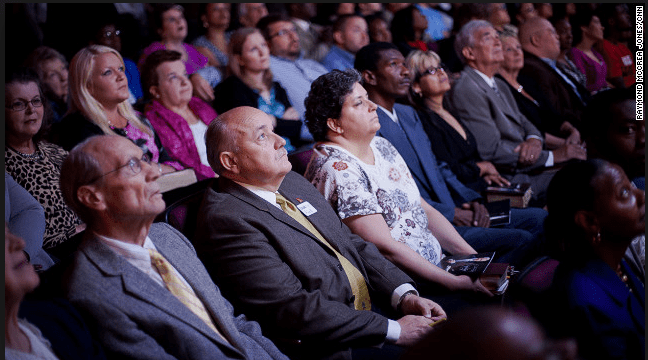
What is less clear: How often should we sing new songs at our churches? I took a stab at answering this question with some practical suggestions over three years ago.

What is even less clear: How often should we sing our (or someone in our church’s) original songs? In Monday’s post I said “in extreme moderation“. Some people understood what I meant by that. Others thought that by “extreme moderation” I meant “we should never sing original songs”. And some others thought that by “extreme moderation” I meant “we shouldn’t sing anything other than the Psalms”. It looks like my statement could use some clearing up.

Yes, the Bible is clear that we should sing new songs to the Lord. It’s less clear about how often we should sing original songs on a Sunday morning. So where can we look for guidance?

1 Corinthians 14 is one of the foremost places in scripture where we are given instructions about principles that should guide our worship gatherings. Paul deals with some tricky issues like tongues and prophecy, and in so doing, he lays out some guidelines that can help govern us as we think about using original songs.

1. Make sure the church is being built up (1 Cor  14:3-4, 12, 26)
2. Make sure what’s going on is clear to the people in the room (1 Cor 14:7-11, 33)
3. Engage both the spirit and the mind (1 Cor 14:15)
4. Try to engage outsiders (1 Cor 14:16)

So, when choosing songs for any worship gathering, some of the questions going through a worship leader’s head should be:

1. Will these songs build up my church? (i.e. build them up into Jesus)
2. Will these songs be clear/singable/accessible? 
3. Will these songs engage the minds and spirits of the people in the room?
4. Will outsiders find it too difficult to try to sing along with us?

These questions get us thinking pastorally about song selection. They guide us towards choosing songs that will serve our congregation. And they help us be objective about using our original songs. We can’t run away from these questions. We can’t run away from our responsibility to serve the people of God.

These questions point us towards balance and moderation.

Balance
– Using songs that have lasted for centuries (for a reason) and are known by Christians from all backgrounds and traditions, and even some non-Christians who may have heard them on random occasions
– Using songs from different sources, to ensure that we don’t only express things the same way, with the same wording, with the same kind of melodies and rhythms, but with a broadness and depth that using only one or two sources doesn’t get at.
– Using familiar songs that will build confidence and gain trust
– Using new songs that my church needs to learn so they can be built up even more

Moderation
– Using too many original songs might make it hard for outsiders (from other churches, visitors, non-Christians) to sing along until they’ve been around for a while
– Using too many original songs might make Sunday mornings hard work for the average singer who finds lesser-known songs to require more energy to learn
– It’s harder to think objectively about whether a song is (1) the right fit, (2) melodically and lyrically excellent, and (3) singable, when you’re the one who wrote it.
– If your church is a part of the broader Body of Christ, one principle way you can demonstrate that is by singing songs written by its different members.

To be clear:
1. The Bible clearly encourages the singing and writing of new songs (and so we should).
2. Paul’s encouragement to the New Testament church was to sing all sorts of different songs (Colossians 3:16, Ephesians 5:19) (and  so we should).
3. Paul advocates pursuing the Holy Spirit in our gatherings (and so we should).
4. Paul encourages the leaders of the gatherings to hold the building up of the body as the standard which governs what goes on during a gathering (and so we should).
5. Paul wants as many people engaged in what’s going on as possible (and so we should).

Therefore,

– Sing, sing, sing.
– Sing old songs, sing new songs, sing original songs.
– Sing songs that people can sing along to.
– Point to Jesus 

Oh sing to the LORD a new song;
sing to the LORD, all the earth!
Sing to the LORD, bless his name;
tell of his salvation from day to day.
(Psalm 96:1-2 ESV)

Oh Magnify My Face With Me

1On Monday I posted “Are We Headed For a Crash? Reflections On The Current State of Evangelical Worship“. In addition to being the longest title for one of my blog posts over, it’s also garnered the most discussion. It’s been a good discussion, and a few people kindly disagreed with a few of the things I encouraged worship leaders to do: lead their original songs in moderation, keep the lights in the room up, and get their faces off the big screen. I wanted to explain more of why I think worship leaders should get their faces off the big screen.

In case you don’t know, in many evangelical churches (and conferences) around the world, particularly large ones, the screens are used not only to project the song lyrics, but also the people on stage. During the sermon you’ll be able to see a magnified image of the preacher. And during the songs, you’ll be able to see a magnified image of the worship leader, and the band members, with occasional close-ups (perhaps) of the drummer, or the electric guitarist’s hands, or the bass player’s tattoo, all while the lyrics to the song are projected on the bottom of the screen, in one-to-three line segments.

Here’s why I think it’s a bad idea for the worship leader’s face (and the musicians too) to be projected during worship.

It constantly keeps you in people’s consciousness
Throughout the time of singing, everyone in the room is constantly aware of you, your movements, your mannerisms, your outfit, your sweaty nose, and your personality.

It forces people to look at you
They have no choice but to look at your face. They can either close their eyes or look at your face. What if they don’t want to look at your face? Too bad for them.

It detracts from the focus of the songs
For about 15 – 25 minutes each Sunday, worship leaders have the weighty privilege of deciding what to focus their congregations on. If you happen to employ your screens during those 15-25 minutes, the odds are that your congregation will focus on what’s on them. Gospel-drenched, God-glorifying, Jesus-exalting lyrics? Or your face?

It makes you even more of a celebrity
People are conditioned to treat a person on a screen as a celebrity. Worship leaders are already on enough of a pedestal as it is, that having a congregation stare at their magnified face can only make it worse.

It changes the way you behave (and not in a good way)
I’ve led worship in settings where my face is projected and it just plain out feels awkward. Oops I just licked my lips. That looked weird. Will this shirt look good on screen? Oops they just caught me looking over at myself. Oh wow I really am losing my hair. For goodness sake, there are enough things for us to worry about while leading worship, that how we look on a massive screen shouldn’t be one of them.

It changes the way your team sees themselves
Now your worship team is thinking about all of those same things. They already feel self-conscious enough, and now they have to worry about looking camera-ready. That Mom who just gave birth four weeks ago, that electric guitarist who spilled coffee on his shirt, that drummer who sweats profusely in the shape of a T-Rex on his back, now they’re all thinking about their appearance. 

It prevents you from decreasing
It’s awfully hard for you to decrease when your face is the size of a Honda Civic.

It ensures that you are central
For the duration of the sung worship time, your face is the number one trending topic in the room. 

It necessitates breaking the song lyrics up
The context of the lyrics we’re singing matters. “Upward I look and see Him there who made an end to all my sin” makes more sense when we can see what precedes it: “When Satan tempts me to despair and tells me the guilt within”. It’s helpful to let people see the different chunks of the song in context. It already flies by as it is, and even more so when we chop the chunks up even smaller.

It’s completely unnecessary
So your room is large. So people standing in the back won’t be able to see you very well during worship. So what?

Let me try to preemptively try to answer some questions/address some disagreements:

What about when you’re talking or praying?
This makes more sense to me. When you welcome people, or when you speak to them, or when you’re praying/transitioning in between or after a song, it can definitely be helpful for your face to be projected. At that moment you do want a connection. You do want people to pay attention to what you’re saying. You do want your leadership to be more present. But when the song begins again, the screen can fade to full-screen lyrics. At that moment your role changes and you need your face to disappear.

But why is it OK to project the preacher?
The role of a preacher is to preach the word of God. To communicate the Word of God to the people of God. It is very much a communicative role (duh). The role of a worship leader is not the same. Yes, it’s a pastoral role, but it’s not a preaching role (though songs do preach). Our role is the role of a facilitator. And an effective facilitator facilitates. Facilitating and communicating are two very different roles. Having your face on a screen indicates that you’re on the screen to communicate. Having your face off the screen indicates that you’re there to facilitate. So get your beautiful face off the screen and do some facilitating.

But people will feel so disconnected from the worship leader
First, so what. Second, that’s the point.

But people need to see who’s leading them
They can see you just fine. And if you want, they can see you projected during the speaking bits. But when the singing starts, they don’t need to see whether or not you shaved this morning.

But it’s so boring just to project lyrics
Then make sure you’re projecting lyrics that pack a punch.

So what do you do if your church is currently projecting your face during the songs?

Stop doing it
It’s not a good practice. It’s something that’s increasingly prevalent in large evangelical churches and conferences, and it’s adding to the trend towards performancism that’s resulting in tuned-out congregations. 

Use it as a huge teaching opportunity
Imagine a congregation hearing something like this:

“For years here at (insert your church name here) we have projected the worship leader and worship team on the screen during corporate worship. Our tech crew have done an excellent job at this, and we know that in this large room, many of you have appreciated being able to see what’s going on on stage. But, starting today, we’re not going to project the people on stage on the screen during worship anymore. You’re going to see full-screen lyrics. You might see the worship leader’s face when he speaks or prays, but when we start singing, you’ll just be seeing lyrics only. Why are we doing this? Three reasons. First, we don’t want you to think that you’re coming to a show on Sunday mornings. We want you to come to worship God. Second, we don’t want to distract you from the amazing truths we’re singing, or the amazing gospel we’re proclaiming, or the amazing God we’re encountering. And third, we want to encourage you to be more engaged with God in worship and less focused on who’s on the screen. So, we’re going to keep the lights up, we’re going to ask that you commit yourself to actively engaging in this time, and we’re going to pray now that the Holy Spirit would help this church worship Jesus with more and more freedom in the weeks and months to come.” 

Sounds good to me.