
Waiting Until the Song is Really Finished

There are two extremes when it comes to leading songs in corporate worship. One extreme is to spend too much time on a song and sing it for so long that people are sick of it. Another extreme is to plow straight through each song and hurry along without any consideration of whether the Holy Spirit might be giving different directions.

I shared some thoughts a few months ago on how to protect against the first extreme. Today I’d like to offer some encouragement to you if you seem to experience the latter problem (i.e. plowing through songs) instead.

As a worship leader, I notice this on my worship team when I hear the rustling of pages behind or beside me when we’ve finished the last verse or chorus of a song. I know that my fellow musicians are just trying to be ready for the next song, but many times they’re jumping the gun. I’m sensing the Holy Spirit directing us to linger on the song for a while, to go back and do a certain section again, and when I start to do that, my team isn’t with me. They’ve moved on before the song was really finished.

I notice it in myself too. I can get in a hurry when I’m leading, or get anxious, or be so focused on how we did it in rehearsal, that when the last verse or chorus of a song is done, my mind and my fingers and my heart have moved on. We launch into the next song and miss an opportunity to respond to God’s leading.

So I’m guilty of it, my worship team is guilty of it, and if you’re a worship leader, then you’re guilty of it too. Sometimes we have good reasons to move on quickly (i.e. honoring our pastor’s request to keep to a certain time), but most often we don’t have a good reason at all. We aren’t paying attention to the Holy Spirit’s leading.

Stop talking and listen
One way to be really bad at having a good conversation with people is to be thinking about what you’re going to say next as opposed to listening to what the other person is actually saying. The same principle applies to worship leading. Of course we know what song comes next and we’re thinking through how we’ll get there, but are we listening to the Holy Spirit at all? Sadly, sometimes the answer is no. Effective worship teams and worship leaders learn how to lead/play/sing while at the same time listening to the Holy Spirit.

Practice spontaneity
If you lock all your arrangements down 100% at rehearsal, then you probably will need to plow through it during the service. There are times this is necessary, and the larger your team (i.e. if an orchestra is playing with you) or the more complex your situation (i.e. a video is accompanying the song) the more likely you’ll need to stick with the script. But I hardly ever tell my worship team that we will absolutelydo a song a certain way. I might say we’ll most likely or almost certainly do it a certain way, but I try to resist locking everything down too tightly. Rehearse well and talk through how you’ll most likely do things. Leave yourselves some wiggle room, practice being spontaneous, and talk through how you’ll cue them to where you’re going. They’ll get used to it.

Don’t try to squeeze in a ton of songs
If you have 20 minutes and 5 songs, then there’s not really any room for lingering. 4 minutes each and you’re done. Picking too many songs for a certain amount of time usually results in plowing through them. Pick 4 songs instead and then you have 5 minutes for each one. Or try picking 3. You might not take 20 minutes, but maybe you will. You’ve left some space and some freedom for not having to rush through the songs.

Learn to savor
When I eat vegetables, I eat them as quickly as I can. This is because I hate vegetables. But when I eat a really good steak, I savor it. I eat it slowly. I don’t want it to end. I’m sad when I’m done with it. Why would I rush through a meal that I love? What’s the hurry? Well, maybe dessert, but you get my point. Worship leaders and worship teams that savor (or “enjoy”) God’s presence, will be more able to sense his leading.

As an aside, this is why monthly or bi-monthly worship team gatherings are such a necessity, and why having an unhurried time of singing and “practicing the presence of God” at those meetings will benefit your team immensely. If you’re learning to savor God’s presence and discern his leading when you’re not up front, you’ll be more comfortable with it when the weekend services come.

See it modeled
Some things can be taught and other things need to be caught. If you aren’t comfortable arranging songs loosely or throwing in unplanned repeats at the leading of the Holy Spirit, I would encourage you and/or your team to see it being modeled. The Sovereign Grace Worship Conference is a great place to see this and learn how it can be done effectively. Or find other worship conferences or worship leaders who seem to “get” this.

Relax
Few things will hinder you more as a worship leader than being in a hurry. The major reason why a lot of worship leaders hurry and rush through songs is because they’re afraid that if they leave space, or even a few moments of silence, people in the congregation will get impatient or start looking around at each other like the worship leader has no idea what’s supposed to happen next.

Relax. They aren’t going to think that. (If they do think that, it doesn’t make any difference, by the way.) Take a few moments, or even longer, and before you move onto the next song, listen to whether or not the Holy Spirit is telling you to go back. These can be some of the sweetest times of corporate worship, so let’s try to avoid plowing through them if we can.
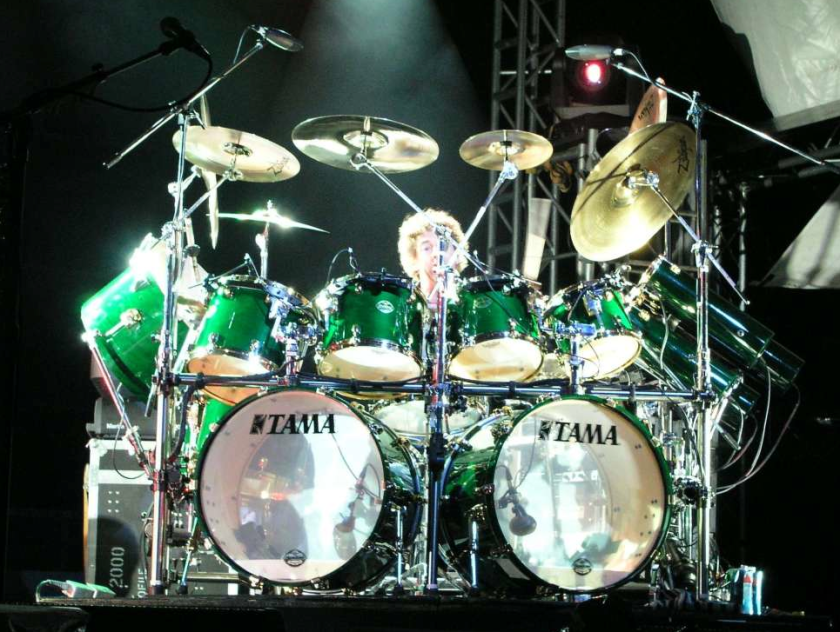
You Don’t Always Have to Have a Drummer

If I could have all of the energy back that I’ve spent over the last several years trying to round up a drummer for the weekend when my regular one is out of town or unavailable, I could probably climb Mount Everest. Seriously.

I wonder if you can relate. I have a good number of singers, and enough bass players, guitarists, and pianists to allow me to lead with a standard 5-6 piece worship team every Sunday. But drummers are harder to come by. Good drummers, I should specify. Since I’ve chosen to set a fairly high standard for drummers, there are middle school drummers and other less experienced drummers who might be in town that I don’t use.

And so I’m in a bind every once in a while and have every other position filled except for the drummer. So I email all the other drummers I know. I beg someone. I ask God to drop one in my office out of thin air. I use someone on the djembe. I offer to fly my oldest brother up from Florida to play drums for me (I actually offered this once…) I might eventually find someone but only after spending a substantial amount of time and energy.

And sometimes it’s what you have to do. Drums are essential to getting a certain “feel”, they are the backbone of the contemporary music sound, and they (hopefully, with a good drummer, and this is why you should have semi-high standards for drummers) hold everything together. Drums are crucial.

But drums can become a crutch for you, your team, and your congregation. But unlike a crutch that you actually need because you can’t walk properly without it, drums can become like a crutch that you don’t need, but you’ve just gotten so used to walking with it that you’re afraid of it being taken away. You don’t need drums. This might be news to you. It might make you shake with fear.

(For others out there, you know this, because you don’t have any drummers. A middle school drummer would be a welcome addition for you. This post isn’t so much for you, although you’re welcome to keep reading. This is more for those of us who have drummers and think that without them the Holy Spirit won’t show up on a Sunday).

You don’t need drums to lead worship effectively. You don’t need drums to have a worship team that sounds good. You don’t need drums to get your congregation to engage with God. And you certainly don’t need drums so that the Holy Spirit will show up on a Sunday. If you doubt that any of these statements are true, you could probably use a break from drums.

So pick a Sunday, any Sunday, and go drum-less. It will force you to choose different songs (and this is good for you), it will make you re-think instrumentation and arrangements (and this is good for you), and it will make you less confident and more dependent on God’s help for things to work (and this is really good for you). 

Expecting to See What You Don’t Model

A common frustration expressed by worship leaders is something along the lines of “they (the congregation) just aren’t that that into it”. It’s frustrating for the people who think through, pray through, and prepare for leading those services. We look out at the congregation and see a majority of people looking sleepy, peppered with those few dear souls who are always “into it” no matter what song we sing.

Why is this? I am increasingly convinced that the main reason our congregations appear to be disinterested and don’t participate in corporate worship with the level of enthusiasm that God desires and deserves is because the people who are up front don’t model it. This isn’t the only reason, of course. But I think it’s the main reason.

It’s a very rare thing for a congregation to go beyond what they see up front. I wrote about this phenomenon a year and a half ago and I said that “what they see is what you get”. In other words, what the congregation sees modeled up front is what will be replicated. Disinterested musicians/pastors results in a disinterested congregation. And vice versa. If the congregation sees people up front who are engaged, expressive and enthusiastic, it will spread.

People need to feel safe, or else they pull back and hold back. People need to feel blessed, or else they remain reserved so that they don’t rock the boat. People need to see it modeled, or else they don’t know what they’re missing. Sunday after Sunday the congregation comes and looks straight ahead. And most of the time they see musicians, pastors, ushers, sound engineers, acolytes, and worship leaders who “just aren’t that into it” either.

Before you look out at your congregation and get frustrated, look in the mirror. Look at your worship team. If you all are not modeling it, you have no reason to expect to see it in the congregation. The ball is in your court.

Let’s get real practical. We’ll start from the bottom up:

  • Is everyone singing? If not, whoever isn’t singing is sending a message that singing is optional. That dude in the eighth row who just doesn’t want to sing now has his excuse: the bass player isn’t either.
  • Is your singing heartfelt? It’s one thing to sing. It’s another thing for our singing to flow from our hearts. We should be affected by what we’re singing about if what we’re singing about has affected us. If the fact that God has reconciled sinners like me to himself through Jesus Christ doesn’t affect me, then I shouldn’t get too excited when I sing. But if that truth has affected me, it should show in my singing. Half-hearted singing is a waste of time, and if you and your team model this kind of singing, you can probably expect it to be the norm in your services.
  • What message is your body sending? There are so many encouragements and commands in Scripture for us to express our worship of God with our bodies that this should be a settled matter (see the end of this post). But it isn’t and probably never will be and that’s a tremendous shame. In the context of a relationship, physical expression is not only normal, but it’s healthy. When physical expression is absent, something is lacking. Still a sad number of Christians can’t bring themselves to express their love for God with their bodies. Those of us who are up front have a responsibility to model what this looks like. If we don’t model this, we can’t expect to see it.

So to the commonly frustrated worship leaders out there (myself included) who look out on a congregation that needs to grow in worship, I would say that we need to get our own house in order first. If and when our up-front example to the congregation changes, we’ll begin to notice a difference around the room.

(For your own reference, here are some helpful scripture references dealing with different physical expressions of worship.)

  • Clapping: Psalm 47:1, Psalm 98:9, Isaiah 55:12
  • Lifting hands: Nehemiah 8:6, Psalm 28:2, Psalm 63:4, Psalm 134:2, Psalm 141:2, Lamentations 3:41, 1 Timothy 2:8
  • Dancing: 2 Samuel 6:14, Psalm 30:11, Psalm 149:3, Psalm 150:4, Ecclesiastes 3:4
  • Kneeling/bowing: Genesis 24:26, 48, 52, Nehemiah 8:6, 2 Chronicles 20:18, Psalm 5:7, Psalm 22:27, Psalm 66:4, Psalm 72:11, Psalm 95:6, Matthew 2:11, Revelation 5:8
  • Lying prostrate: 1 Kings 18:39
  • Shouting: Joshua 6:20, 2 Samuel 6:15, Ezra 3:11, Psalm 20:5, Psalm 27:6, Psalm 33:1, Psalm 33:3, Psalm 42:4, Psalm 47:1, Psalm 66:1, Psalm 71:23, Psalm 81:1, Psalm 126:2, Psalm 126:5, Psalm 132:9, Isaiah 12:6, Matthew 21:9
  • Smiling: Psalm 34:5
  • Jumping: Acts 3:8

The Perseverance of the Worship Leader

A few nights ago our bathroom sink got clogged. Really badly. Some food accidentally went down the drain and nothing – I mean nothing – would unclog it. I tried, in this order: the cheap plastic “snake” you buy from the grocery store to go deep into the pipe, two bottles of Draino, a plunger (well, my Dad actually tried this one), and super-duper-high-powered drain cleaner that is “guaranteed” to break through the clog. Well, I should ask for my money back because it didn’t work. Nothing worked.

So yesterday I broke down and called the plumber. He said he’d be happy to come by today and fix it. I asked how much it would cost. He said $150.

I don’t particularly enjoy flushing $150 down the drain (literally and figuratively), so I endeavored to persevere and fix this stupid clog myself. You have to understand that I’m about as handy as a three-week-old baby, but when we’re talking $150 I’ll give it a try.

So I went to Home Depot and bought a $20 manual drain snake. And this morning I spent an hour on the bathroom floor doing everything I could to fix this problem myself and impress my wife with how handy I’ve become. An hour had passed and it wasn’t looking promising.

So I prayed: “God, you know I don’t have $150 to just give away to a plumber. I’m here on the bathroom floor, breathing in a deadly combination of three different kinds of toxic drain cleaners, wearing grocery bags and gloves over my hands to protect my flesh from melting off, I bought a manual snake drain from Home Depot, and all I need you to do is help me fix this stupid clog.”

I tried one last time to jam all fifteen feet of the manual drain snake all the way into the pipe, not allowing the resistance of the clog to sway me. Sure I was making a ton of noise and our daughter was taking her nap just one room away. I didn’t care. I had $150 on the line.

Soon the clog broke and I beheld the most glorious sight: water pouring down the sink and not backing up. I called the plumber and canceled the appointment in triumph. And yes, my wife was very impressed. After all, she’s due to have a baby any day now and it’s awfully nice to not be breathing in toxic fumes.

This all made me think about those “clogs” we face in ministry. The difficult people who never seem to change. The rut we can’t seem to get our services out of. The attendance number that just won’t budge. The congregation that doesn’t seem to ever grow in worship. Bad equipment. Low morale. Small repertoire. Repeated disappointment.

Whatever the clog is for you, the temptation for all of us is to, at some point, call the plumber. To give up. To let someone else do it. This might mean just giving up or it might mean looking for another job.

And sometimes you do just have to break down and call the plumber. But most of the time, and as was the case with me this morning, I had been given all the tools I needed to do the job if I just stuck with it long enough.

God has placed you where you are. He has given you the gifts (i.e. tools) that you have. Those clogs that you’re encountering might seem impossible to break. But what’s really the problem – the clog or your commitment to persevere?

Let me paraphrase (roughly but I hope faithfully) James 1:2-3: “Count it all joy, my worship leaders, whenever you meet clogs of various kinds, for you know that the testing of your faith produces perseverance.”

Too often we’ve got all the tools we need to do the job. But we don’t persevere. I think God clogged my bathroom sink for a reason: to encourage me and to encourage you. Get your hands dirty. You’ve been given good tools and God wants to use you to break through some stuff.

Using Humor to Get Your Team to Read Your Emails

I’ve lost track of how many times we’ve encountered a problem at a worship team rehearsal or a service that would have been avoided if people had read the entire email I had sent them in which those potential problems had been addressed. Maybe it’s a schedule change, a room location, an arrangement heads-up, or whatever. People either just read the beginning of the email, scan it, or don’t read it at all.

Maybe they’re not committed enough. Maybe they don’t take leading worship seriously. Maybe they don’t care.

Or maybe your emails are too long and boring.

One way to get your teams to read your whole email is to keep it short. Another way is to organize it well, using short paragraphs, headings and boldface (in moderation). Another way is use humor.

I’ve recently begun making sure the emails I’m writing to my team are as short and organized as possible. After all, many of the people on the team receive several hundred emails per hour. They don’t have time to read a missive from me. Short and clear is the main thing.

Then I’ll go back over it and add some jokes.

I’ll rib some people who are good sports. I’ll say that on the back of the worship team schedule they’ll find a hidden treasure map. I’ll tell them that if they miss our monthly meeting on March 28th that they’ll get the hives. You get the point.

There isn’t a person on your worship team who doesn’t like to laugh. Everyone loves to laugh. They’ll read your emails if they make them laugh and you’ll have accomplished your goal.