Come You Sinners

Last weekend in our services I shared a song that I wrote called “Come You Sinners”. I’m always hesitant to share my own songs on here, but several people were helped by it, so I thought I’d pass it along in the event that it’s helpful to you or your congregation. I borrowed two lines from the old hymn “Come Ye Sinners“, and one line from Augustine’s Confessions in the chorus.

Here are the lyrics and a very rough demo that I recorded for the worship team at my church.

Come, you sinners, poor and needy
Come behold your Savior’s face
Full of love and rich in mercy
Hands outstretched with endless grace

Nothing you have done has earned it
Full atonement, vast and free
Nothing you can do can change it
Rest on Jesus’ victory

CHORUS:
Our hearts are restless till we find our rest in You
Our lives are hopeless till we find our hope in You
Jesus, You are my life
Jesus, I give my life to You

Come you weary, heavy laden
Burdened under shame and sin
There is never condemnation
When your life in Christ is hid (chorus)

There is no one else to turn to
He will guide you all your days
His perfect love is perfect for you
Trust in Jesus’ saving grace (chorus)
Jamie Brown. © 2011 Worthily Magnify Music. Affiliated with CCLI.


Worship Leader Nightmares

Last night I had one of those dreams – one of those worship leaders nightmares – when the service is starting and the congregation is assembled but I am absolutely unprepared. In this particular dream it was one of our biggest services of the year, Lessons and Carols, and when it came time to sing a song, everything fell apart.

The congregation stared and waited. I was leading from the keyboard and it was too low for me to reach. I tried to play it but I couldn’t. The band was confused. The congregation was murmuring. I asked someone to help me raise the keyboard. They tried to help me and knocked all my music over. The congregation was now totally disengaged. I got set up again and started to try the song, but one of those webpage-like advertisements covered up the chord chart. Yes, that’s right. A digital pop-up ad was all of the sudden on my chord chart. So I stopped and waited. Then tried again. Then mercifully one of our baby girls crying woke me up.

Do you ever get these dreams? If you’re a worship leader I bet you do. They always a bit different but they share the basic horrifying premise: you’re on stage, the congregation is looking at you, and you are failing. You’re not ready, you’re not doing a good job, and every one knows it.

I try not to read too much into dreams. When I dream about a bunny rabbit talking to me in French while we both travel the Mexican coastline in a minivan, I don’t usually try to unpack the prophetic meaning or see what God is trying to tell me. Weird dreams just happen.

But dreams can tell us something about where we’re anxious and where we’re insecure. If you’re a student, you’ll probably have dreams about showing up for your final exam without ever having attended the class. If you’re a doctor, you’ll probably dream about misdiagnosing a patient or making a terrible mistake. Worship leaders don’t have lives at stake or the danger of failing a class, but we do have to “perform” to a certain degree each time we lead. We have to execute certain up-front responsibilities like talking, singing, leading a band, making transitions, etc. And the prospect of showing up without any clothes on or with all of our songs suddenly required to be sung in Chinese rightfully terrifies us.

Here is where I’m going with this: First, if you’re a worship leader, you’re not the only one who gets these kinds of dreams. So be comforted. And maybe leave a comment affirming that this is true for our mutual benefit. Second, every time you have one of these dreams (once a week anyone?), make a default assumption that it’s God’s way of revealing anxiety and stress in you that you need to deal with. Sure, it might be a random dream. But it also might just be God’s way of graciously exposing your fear of man.

God knows your dreams, believe it or not. Some are just your brain processing nonsense. Others might be a bit more telling. My dream last night tells me this: I’m afraid of making a fool of myself. I struggle with this fear on a semi-regular basis. I need God’s peace. I need to repent of my desire to be perfect. I need to trust even more in Jesus. And maybe, after all that, take a ride along the Mexican coast in a minivan. But not with the bunny rabbit. I don’t speak French.

You Don’t Always Have to Have a Drummer

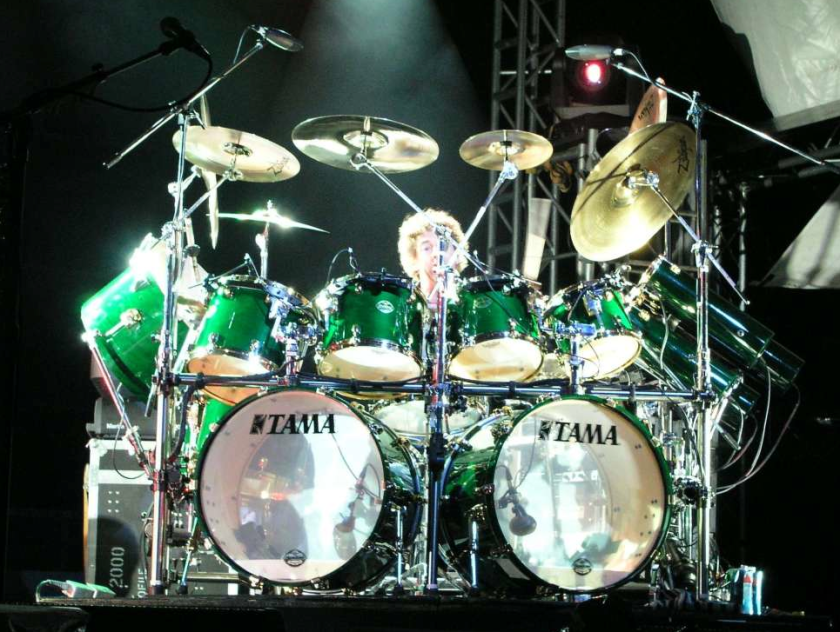
If I could have all of the energy back that I’ve spent over the last several years trying to round up a drummer for the weekend when my regular one is out of town or unavailable, I could probably climb Mount Everest. Seriously.

I wonder if you can relate. I have a good number of singers, and enough bass players, guitarists, and pianists to allow me to lead with a standard 5-6 piece worship team every Sunday. But drummers are harder to come by. Good drummers, I should specify. Since I’ve chosen to set a fairly high standard for drummers, there are middle school drummers and other less experienced drummers who might be in town that I don’t use.

And so I’m in a bind every once in a while and have every other position filled except for the drummer. So I email all the other drummers I know. I beg someone. I ask God to drop one in my office out of thin air. I use someone on the djembe. I offer to fly my oldest brother up from Florida to play drums for me (I actually offered this once…) I might eventually find someone but only after spending a substantial amount of time and energy.

And sometimes it’s what you have to do. Drums are essential to getting a certain “feel”, they are the backbone of the contemporary music sound, and they (hopefully, with a good drummer, and this is why you should have semi-high standards for drummers) hold everything together. Drums are crucial.

But drums can become a crutch for you, your team, and your congregation. But unlike a crutch that you actually need because you can’t walk properly without it, drums can become like a crutch that you don’t need, but you’ve just gotten so used to walking with it that you’re afraid of it being taken away. You don’t need drums. This might be news to you. It might make you shake with fear.

(For others out there, you know this, because you don’t have any drummers. A middle school drummer would be a welcome addition for you. This post isn’t so much for you, although you’re welcome to keep reading. This is more for those of us who have drummers and think that without them the Holy Spirit won’t show up on a Sunday).

You don’t need drums to lead worship effectively. You don’t need drums to have a worship team that sounds good. You don’t need drums to get your congregation to engage with God. And you certainly don’t need drums so that the Holy Spirit will show up on a Sunday. If you doubt that any of these statements are true, you could probably use a break from drums.

So pick a Sunday, any Sunday, and go drum-less. It will force you to choose different songs (and this is good for you), it will make you re-think instrumentation and arrangements (and this is good for you), and it will make you less confident and more dependent on God’s help for things to work (and this is really good for you). 

Expecting to See What You Don’t Model

A common frustration expressed by worship leaders is something along the lines of “they (the congregation) just aren’t that that into it”. It’s frustrating for the people who think through, pray through, and prepare for leading those services. We look out at the congregation and see a majority of people looking sleepy, peppered with those few dear souls who are always “into it” no matter what song we sing.

Why is this? I am increasingly convinced that the main reason our congregations appear to be disinterested and don’t participate in corporate worship with the level of enthusiasm that God desires and deserves is because the people who are up front don’t model it. This isn’t the only reason, of course. But I think it’s the main reason.

It’s a very rare thing for a congregation to go beyond what they see up front. I wrote about this phenomenon a year and a half ago and I said that “what they see is what you get”. In other words, what the congregation sees modeled up front is what will be replicated. Disinterested musicians/pastors results in a disinterested congregation. And vice versa. If the congregation sees people up front who are engaged, expressive and enthusiastic, it will spread.

People need to feel safe, or else they pull back and hold back. People need to feel blessed, or else they remain reserved so that they don’t rock the boat. People need to see it modeled, or else they don’t know what they’re missing. Sunday after Sunday the congregation comes and looks straight ahead. And most of the time they see musicians, pastors, ushers, sound engineers, acolytes, and worship leaders who “just aren’t that into it” either.

Before you look out at your congregation and get frustrated, look in the mirror. Look at your worship team. If you all are not modeling it, you have no reason to expect to see it in the congregation. The ball is in your court.

Let’s get real practical. We’ll start from the bottom up:

  • Is everyone singing? If not, whoever isn’t singing is sending a message that singing is optional. That dude in the eighth row who just doesn’t want to sing now has his excuse: the bass player isn’t either.
  • Is your singing heartfelt? It’s one thing to sing. It’s another thing for our singing to flow from our hearts. We should be affected by what we’re singing about if what we’re singing about has affected us. If the fact that God has reconciled sinners like me to himself through Jesus Christ doesn’t affect me, then I shouldn’t get too excited when I sing. But if that truth has affected me, it should show in my singing. Half-hearted singing is a waste of time, and if you and your team model this kind of singing, you can probably expect it to be the norm in your services.
  • What message is your body sending? There are so many encouragements and commands in Scripture for us to express our worship of God with our bodies that this should be a settled matter (see the end of this post). But it isn’t and probably never will be and that’s a tremendous shame. In the context of a relationship, physical expression is not only normal, but it’s healthy. When physical expression is absent, something is lacking. Still a sad number of Christians can’t bring themselves to express their love for God with their bodies. Those of us who are up front have a responsibility to model what this looks like. If we don’t model this, we can’t expect to see it.

So to the commonly frustrated worship leaders out there (myself included) who look out on a congregation that needs to grow in worship, I would say that we need to get our own house in order first. If and when our up-front example to the congregation changes, we’ll begin to notice a difference around the room.

(For your own reference, here are some helpful scripture references dealing with different physical expressions of worship.)

  • Clapping: Psalm 47:1, Psalm 98:9, Isaiah 55:12
  • Lifting hands: Nehemiah 8:6, Psalm 28:2, Psalm 63:4, Psalm 134:2, Psalm 141:2, Lamentations 3:41, 1 Timothy 2:8
  • Dancing: 2 Samuel 6:14, Psalm 30:11, Psalm 149:3, Psalm 150:4, Ecclesiastes 3:4
  • Kneeling/bowing: Genesis 24:26, 48, 52, Nehemiah 8:6, 2 Chronicles 20:18, Psalm 5:7, Psalm 22:27, Psalm 66:4, Psalm 72:11, Psalm 95:6, Matthew 2:11, Revelation 5:8
  • Lying prostrate: 1 Kings 18:39
  • Shouting: Joshua 6:20, 2 Samuel 6:15, Ezra 3:11, Psalm 20:5, Psalm 27:6, Psalm 33:1, Psalm 33:3, Psalm 42:4, Psalm 47:1, Psalm 66:1, Psalm 71:23, Psalm 81:1, Psalm 126:2, Psalm 126:5, Psalm 132:9, Isaiah 12:6, Matthew 21:9
  • Smiling: Psalm 34:5
  • Jumping: Acts 3:8

Worship Leading Tricks (Or Should it Be Tips?) – Pt. 2

Yesterday I shared some basic worship leading “tricks” (although “tricks” might not be the best word, but I’ll just go with it. Don’t judge me…) that don’t require months and months or years and years of experience to pick up. These range from how to handle bad singers, jitters, mistakes, etc. Here are some more worship leading tricks. Maybe “tips” is a better word. Oh well. Tricks it is.

When you don’t know how to end a time of worship, sing the Doxology
Everyone knows it. It’s easy to sing. It’s Trinitarian. It ends with “amen”. Don’t do it every time, but many times when we have an extended time of worship at a service or smaller group meeting, I’m not sure how to wrap it up. Stop playing and just sing the doxology acappella. Beautiful.

Your pastor is your insurance
Here’s an example: in the Anglican church we have a “rule” that during Lent you can’t say “Alleluia”. You have to wait until Easter. I get this, but I also think it’s a little bit silly. I asked my pastor if he cares about this rule. He said he didn’t. So I use songs during Lent that have the word Alleluia. When I get comments/complaints, I tell them my pastor said it’s OK. Bam. Use your pastor for cover.

A good recording goes a long way
If you can avoid it – don’t teach your worship team a new song by singing it to them at rehearsal. Unless they’re really good at making up and picking out parts and arrangements on the spot, you’re guaranteeing a long slog of getting everything sorted out. Find a good recording online somewhere and find a way to get it to your team a few days (at least) in advance. Your drummer should pay attention to how the drummer plays, your singers pay attention to the harmonies, etc. You do yourself and your team a favor when you do this.

Unplug your guitar cable from the direct box first
Check with your sound engineer about this – but if you’re unplugging your guitar during a service, to avoid the loud pop of doom, unplug it from the direct box first. Only unplug from your guitar if you’re 100% you’ve been muted, or if you have a pedal tuner that mutes your signal pre-direct box. If you don’t follow this rule, and you send a deafening pop through the speakers, your sound engineer will officially hate your guts because the congregation will give him the dirty looks. Help a brother out.

Flip flops are a no-no
Unless (1) you’re leading worship on the beach or (2) you’re leading worship on the beach, don’t wear flip flops while leading worship if you’re a guy. For some reason, this rule doesn’t necessarily apply to women. Their flip flops and fancier and their feet are generally considered to be less gross.

Getting the right tempo matters
Don’t just launch into a song in a hurry. Take a few seconds to hum a section of the song in your head to make sure you get the tempo right. Don’t let your drummer or keyboardist or guitarist start off the song unless you’re confident they’ll start it off with the right tempo. If you are having someone else start off the song, decide the BPM during rehearsal, and if they have an iPhone or some other smart phone, make sure they have one of the many free metronome apps that are out there. It can silently blink the tempo at them. Doing a song too slow or too fast can ruin it.

It’s easier to correct the tempo with your voice than with your instrument
If the song is too fast or too slow, the temptation is to start strumming or playing the keys more rapidly or slowly in order to give the rest of the band a hint. Not a terrible idea, but in my experience, it’s easier to get the band to speed up or slow down to the correct tempo if I just stubbornly start singing faster or slower. Try it.