 Last week I shared some thoughts on how to grow (by auditioning) and maintain (by treating the body like it’s made up of different members) healthy worship teams.
In smaller churches, a worship team might “grow” to be 3 or 4 people, and the worship leader’s job is mainly to keep the small body healthy. In larger churches, a worship team might grow to be quite large, with a lot of moving parts, and the worship leader’s job description grows from just keeping the body healthy, to also arranging the moving parts
By “moving parts” I mean that you don’t just have one bass player, you have four. You don’t just have two singers, you have twelve. In every role on the team, you have multiple people who can serve. And to further complicate things, each of these people is at a different gifting level. How do you rotate different musicians of differing skill levels while maintain some sort of consistency and standard?
Before I go any further, I have to say that the foundation of all of this is from what I wrote about telling your worship team it’s a body and treating it like one. If you have to tiptoe around certain members of your team or spend a lot of energy protecting egos and respecting territories, then none of this applies. But if you can be honest with people about their giftings, then hopefully some of this will help.
Scenario A: The good drummer scenario
In contemporary music, the drummer is the glue. He holds everything together. If he is weak, the whole sound is weak. The importance of a good, solid, in-time, dependable, and sensitive drummer cannot be overemphasized. Going back to the 1 Corinthians picture of the body, it’s not that the drummer is more important than anyone else on the team, but that his role in the body happens to be more prominent. Let’s say your drummer is the nose on your face and your acoustic guitarist is your ear. If you lose an ear, it’s a really big deal. But you can grow your hair out to cover it up. If you lose your nose, it’s also a big deal. But you’ll have a hard time covering it up. Is the nose more important than the ear? No. But it’s more prominent.
If you have a good drummer, you can rotate in less skilled bass players, pianists, guitarists, singers, etc., and it won’t be such a big deal. So seek after skilled drummers and do all that you can to not to lose them. With a good drummer in place, you have more freedom to rotate musicians in the other positions without having to carry as much of their weight.
In Northern Virginia, I am not able to get my musician’s availability longer than a month in advance at a time. And because of the nature of their work, their availability is not terribly predictable from month to month. So each month, I send an email to my team asking for their availability for the coming month. Based on their responses, I schedule them. This a bit more time consuming than having pre-set teams, or team A, B, and C, but it allows me to decide who plays when, and lets me rotate new members onto the team.
Scenario B: The pre-set teams scenario
If God hasn’t gifted you with a solid drummer who can hold things together like the glue, than either your guitar/piano playing will now be the glue, or whoever else you find most dependable. In this scenario, you’ll probably find your life to be a whole lot easier if you have pre-set teams, like a team A, B, and C, where the same musicians always play with each other, in order to have some sort of equilibrium that isn’t being thrown into chaos every month when the schedule changes.
This still allows you to rotate in new musicians. You can either see your team “D” as serving every fourth Sunday of the month and being made up of current musicians and new musicians. This way, once a month, you have an opportunity to use someone new, or to re-use someone who is already on the roster.
When someone who is on a set team is unavailable, you can either have them find their own replacement, or you can find one for them. I tend to choose the latter option, so that I can have oversight over who is being asked to serve.
Scenario C: The slim pickings scenario
You won’t find any command in scripture to have a giant worship team. If you’re serving a smaller church, or maybe you’re rebuilding your music ministry, you should feel totally confident in having a small worship team. If you play an instrument, you’ll probably remain constant from week to week. You can rotate a singer or two, and perhaps another instrumentalist or two to give variety and to provide some support for yourself. But if you don’t have a plethora of musicians from which to choose, you shouldn’t feel like you’re any less of a worship leader than someone at a mega church.
No matter what size your church or worship team, the principle is the same: your job is to help the members of the body see where God is arranging them.
The practicalities of how that plays out will change the larger the church and worship team. God has gifted my church with a skilled drummer, and I prefer to decide who plays when, so I rotate musicians on a monthly schedule based on their availability. Other churches use pre-set teams, utilize software like Planning Center to confirm availability, or just outright pay their musicians.
Every church is different, so no one solution is the answer. With a heart to steward the gifts and talents God has placed before you, and an honesty about how God is arranging the members, you’ll discern what’s best in your setting.
 I’m always amazed when I visit a church in person or check out a church’s website and see that they advertise certain services by insulting other ones. Maybe a church is starting an evening service and trying to market it. Or maybe across campus in the gym the church offers a contemporary service and they need to advertise it. Sometimes in a quest to describe what one service is like, they end up insulting another service at the same church.
 On each of the last three Sundays, about 15 minutes before the service was supposed to start, I was faced with out-of-the-blue things that had the potential of completely throwing and/or my worship team off for the whole service.
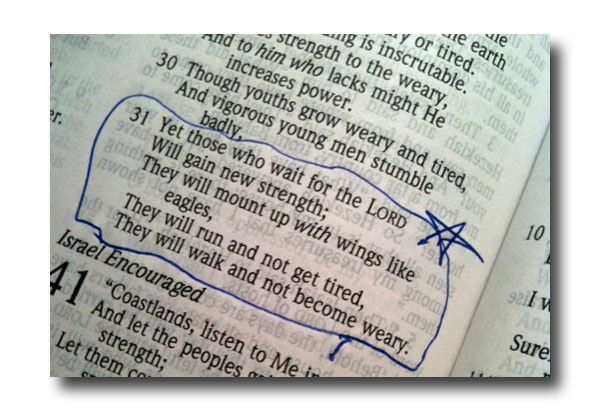 A few Saturday evenings ago as I was thinking about the songs I’d be leading the next morning, I began to get a strong sense that God wanted me to share a song of encouragement after “Everlasting God” for people who have been waiting for an answer from him for a very long time. Sometimes this kind of nudge happens in the moment, and so I attempt to convey a prophetic impression of God’s heart on-the-spot. This time, I was grateful that the Holy Spirit was giving me advance notice, and so I jotted down some quick lyrics and had them on my music stand the next morning in case it felt right.



 Worthily Magnify