Lessons From the Last Decade: Leading A Worship Team Well

1When I came to The Falls Church Anglican ten years ago, I inherited a worship team of about 20-30 members, made up of men and women of different ages, backgrounds, musical experiences, etc. Over the last decade there’s been almost complete (and constant) turnover in the team (Washington D.C. is a very transient area), though there are a few that have been with me the whole time, and I have really enjoyed this part of my “job”.

But I’ve not always done a great job at leading a worship team. I’ve made some mistakes (!) and learned some lessons, and I offer these suggestions for those of you who have any role in the leading, caring, and feeding of a group of volunteers/musicians in your own church.

Recruit to a vision
Don’t just fill musical slots. Recruit people who want to be involved in serving the congregation in a pastoral role, using music as a tool to point the church to Christ.

Add slowly
It’s easier to add someone to a team than it is to ask someone to step down from a team. Resist the temptation to put someone up front before you’re sure (and they’re sure) they’re ready to be a committed member of the church.

Add carefully
Don’t just audition someone musically. Ask them to tell you their story. Ask them why they want to serve. Listen to their testimony. Tell them what you’re looking for. See what questions they ask you. Let them come to a few rehearsals. Let them play on a Sunday or two before they’re officially on the team. Look for the three Cs: character, competency, and chemistry.

Build community
Your team’s effectiveness in worship leading will increase exponentially if they love each other, have fun and laugh together, pray together, worship together, go out to eat with one another, have inside jokes with one another, and enjoy each other’s company.

Don’t lose momentum
It will take years to build the kind of community I describe above. But you can torpedo it in a matter of weeks or months if you don’t keep cultivating it, through intentional time together outside of Sunday mornings.

Be a clear leader
In your musical and pastoral roles, be as clear as you can be about what your goals are, and what your expectations are. People respond well to clear leadership. They shy away from timidity.

Be organized, dependable, and consistent
A disorganized leader breeds a messy team. An undependable leader breeds a flaky team. And an inconsistent leader breeds a dysfunctional team. You set the tone.

Always pray when you’re together
No meeting, rehearsal, or service should happen without you calling your team to a time of prayer. Never give people the impression that you think you don’t need God’s help.

Keep people laughing
People love to laugh. If your times together as a team are marked by laughter, then people will want to come back, even if it means getting up early, staying out late, or spending an entire morning at church. Laughter is a powerfully magnetic tool.

Laugh at yourself
Be the first person to poke fun at yourself. This will set a tone of humility and self-forgetfulness that will permeate the whole atmosphere of your team.

Don’t ask too much of people
The members of your team are real people with lives, families, jobs, other commitments, etc. If being a member of your team has a detrimental impact on their lives, you’re asking too much of them. When the problem is that you’re asking too much, you need to reevaluate your system. But if the problem is that someone is just too busy, then you need to be quick to release people before they get burned out.

Don’t ask too little of people either
Call people to a high standard of service, musicianship, involvement, preparation, ministry, and commitment. Then expect them to step up. It’s possible to do this in a way that’s not at odds with people’s family/personal lives and careers (and it looks different depending on where your church is). People want to be challenged, they want to grow, and they want you to help them.

Four Wrong Turns On The Road To Performancism

1The evangelical church is at a worship crossroads.
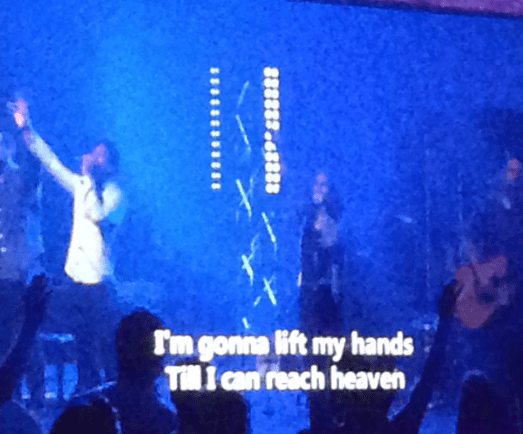
A generation of older, baby-boomer, not-so-hipster worship leaders are in the last decade or two of their full-time ministry. And a new generation of younger, Generation X, youthfully vigorous worship leaders have taken (or are about to take) the wheel. They are determining the trajectory of worship in music all around the world and will be at the helm for the next 20-30 years.

As a card-carrying member of this generation, I say that we have some very important decisions to make. Can this trend towards performancism be reversed? Can we spend “our turn” stewarding our ministries in such a way that orients the worship of the church more strongly towards the glory of God in Jesus Christ and away from the performance of the people on stage?

It’s important to know the wrong turns that have led much of the evangelical worship world to where it is today: embracing a trend of performancism in worship.

Wrong turn # 1: Away from substance
The message really does matter. The means matter, but when the means become the message, or obscure the message, and when this is OK with us, we have lost our bearings. Sadly, too many in the evangelical worship world have lost their bearings, and the style is predominant, while the substance is subordinate. Our message is the gospel. The good news of Jesus Christ. The only hope for the world.

In our different contexts, we can and should use any musical means we can to exalt him. But it must always be about exalting him. Is the message crystal clear? Let’s not settle for obscurity. We must ensure that Jesus (the substance) is always front and center, and the music (the style) is always pointing to, magnifying, proclaiming, exalting, and celebrating him. We can’t turn away from this.

Wrong turn # 2: Away from congregational singing
One of the most stunning descriptions of worship in heaven comes in Revelation 5:11-13 when John says that he “looked, and… heard around the throne and the living creatures and the elders the voice of many angels, numbering myriads of myriads and thousands of thousands, saying with a loud voice, ‘Worthy is the Lamb who was slain, to receive power and wealth and wisdom and might and honor and glory and blessing!’ And I heard every creature in heaven and on earth and under the earth and in the sea, and all that is in them, saying, ‘To him who sits on the throne and to the Lamb be blessing and honor and glory and might forever and ever!‘”

Not only is the substance of the worship in heaven crystal clear, but the sound of countless voices worshipping “him who sits on the throne and… the Lamb” together is crystal clear as well. How about in our churches?

Worship leaders: we are tragically losing our priority for congregational singing, under the guise of offering people an “experience”. What people need to experience during corporate worship is the corporate praising of Jesus. There is no greater experience to offer people than to stand among others who are lifting their hearts and voices in praise. As wonderful as good effects, art, lighting, arrangements, videos, buildings, liturgy, and pipe organs are, they pale in comparison to the sound of human voices lifted together in worship of God. A worship leader who doesn’t cultivate a singing congregation over time isn’t fulfilling the number one most important part of his job.

If we continue to settle for offering people worship “experiences” and settling for lackluster or even non-existent singing, we are setting evangelical worship on a sure course towards a crash into a wall of flashy, unsatisfying performances. We must lead with a invitational, pastoral heart to draw others in to singing praise with all of heaven. The best kind of “congregational experience” is congregational singing.

Wrong turn # 3: Away from the gospel
I’ve sat through entire church services, listened to entire worship albums, and attended entire conference sessions where the gospel is assumed, not proclaimed, as if everyone in the room has heard the gospel before, has that box checked, and except for when it pops up in a popular song, we don’t really need to emphasize that whole gospel thing very much.

Practically, the gospel assumed is the gospel omitted. Worship leaders, we have a responsibility to our congregations to ensure the centrality of the gospel in our worship services.

It’s Jesus’ “streams of mercy, never ceasing” that “call for songs of loudest praise”. It’s Jesus alone who makes a way for us to “with confidence draw near to the throne of grace” (Hebrews 4:16). Christ-centered worship isn’t just a trendy new worship catchphrase. It’s our reality. And we can either choose to center our worship around the good news of Jesus Christ, or we can choose not to. Something will be at the center. What will that “something” be?

When the core is compromised, all the branches are compromised. The core must be the gospel. Must. Must. Must.

Wrong turn # 4: Towards the performers
When you’ve lost your substance, when no one is singing along, and when you’re not centered around the gospel, you gravitate towards hiring/elevating a performer as your worship leader, making him into a mini-celebrity, maybe putting his face on the big screen, and hoping he gets your congregation to worship.  The performer/celebrity worship leader phenomenon is troubling and dysfunctional, but it’s a symptom of much deeper problems, and previous “wrong turns” that led to this place.

And this is what has now bubbled up to the surface. Performancism, which requires performers to perpetuate Sunday morning worship performances. But under the surface are deeper issues, and significant wrong turns. We need to commit to addressing the underlying issues, and then we’ll begin to see a change above the surface.

Final thoughts
Lest any of what I’ve written be construed as exclusively relevant to contemporary churches with drums and guitars, let me say loud and clear that formal, high-church, liturgical churches with organs and choirs are just as prone to performancism. The performance of an organist, the offerings of a choir, the recitation of a liturgy, the sacred movements of the clergy and acolytes can all become the same kind of performance prevalent in the mega-church down the street. The choir directors, organists, accompanists, and worship leaders at those churches have just as much reason to step back and evaluate their ministries as the guy with a guitar at a church whose liturgy is pretty much “songs then sermon”.

This crossroads is before all of us, formal and informal, liturgical and non-liturgical, mega or small.

We can go down the road towards performancism and find ourselves with congregations who come to observe the actions of the select few on the platform, hearing words and seeing sights that have little lasting impact on their life, with worship leaders building their little worship kingdoms.

Or we can experience another reformation, and cultivate congregations eager to exalt Christ, engaged with God as they draw near to him together, with hearts fixed on him, all the while being served by musicians whose passion is to see the Church gathering and celebrating the good news of the gospel, encountering a living God through his living Word, in the power of his Holy Spirit.

I want to spend my years stewarding that worship reformation wherever I am. 30 years from now I want to hand off to the next generation a worship ministry with an unmistakable trajectory towards Jesus, for Jesus, through Jesus, about Jesus, and in Jesus.

How about you?

Are We Headed For A Crash? Reflections On The Current State of Evangelical Worship

1Last week I spent a couple of days attending the National Worship Leader Conference, hosted by Worship Leader Magazine, featuring many well-known speakers and worship leaders. The conference was held about 15 minutes down the road from me, so it was an opportunity I couldn’t pass up. I’m glad I went.

I met some new people, heard some thought-provoking teaching, enjoyed some good meals and conversations with worship leader friends, and experienced in-person some of the modern worship trends that are becoming the norm in evangelicalism. It was eye-opening in many ways.

Over the last few days I’ve been processing some of what I saw and heard.

Worship Leader Magazine does a fantastic job of putting on a worship conference that will expose the attendees to a wide variety of resources, techniques, workshops, songs, new artists, approaches, teachings, and perspectives. I thought of Mark Twain’s famous quote “If you don’t like the weather in New England, just wait 5 minutes”. The same could be said of this conference. It’s an intentionally eclectic mix of different speakers, teachers, worship leaders, and performers from different traditions, theological convictions, and worship leading philosophies. You’ll hear and see some stuff you like and agree with, and then 5 minutes later you’ll hear and see some stuff you don’t agree with at all.

It’s good for worship leaders to experience this kind of wide-exposure from time to time, and the National Worship Leader Conference certainly provides it.

Yet throughout the conference, at different sessions, with different worship leaders, from different circles, using different approaches, and leading with different bands, I picked up on a common theme. It’s been growing over the last few decades. And to be honest, it’s a troubling theme. And if this current generation of worship leaders doesn’t change this theme, then corporate worship in evangelicalism really is headed for a major crash.

It’s the theme of performancism. The worship leader as the performer. The congregation as the audience. The sanctuary as the concert hall.

It really is a problem. It really is a thing. And we really can’t allow it to become the norm. Worship leaders, we must identify and kill performancism while we can.

It’s not rocket science.

Sing songs people know (or can learn easily). Sing them in congregational keys. Sing and celebrate the power, glory, and salvation of God. Serve your congregation. Saturate them with the word of God. Get your face off the big screen (here’s why). Use your original songs in extreme moderation (heres’s why). Err on the side of including as many people as possible in what’s going on. Keep the lights up. Stop talking so much. Don’t let loops/lights/visuals become your outlet for creativity at the expense of the centrality of the gospel. Point to Jesus. Don’t draw attention to yourself. Don’t sing songs with bad lyrics or weak theology. Tailor your worship leading, and the songs you pick, to include the largest cross-section of your congregation that you can. Lead pastorally.

I am a worship music nerd. I listen to a lot of it. I follow the recent developments. I know who’s out there (sort of). I try to keep up (it’s not easy). Even I didn’t know most of the songs that we were supposed to be singing along to at the conference. I tuned out. I sat down. I Tweeted. I texted my wife. I gave up.

You’re not reading the ramblings of a curmudgeony guy complaining about all the new-fangled things the kids are doing these days, with their drums and tom-toms and electric geetars. You’re reading the heart-cry of a normal guy who’s worried about what worship leaders are doing to themselves and their congregations. People are tuning out and giving up and just watching.

This is not a criticism of the National Worship Leader Conference, though I do think they could make some changes to more intentionally model an approach to worship leading that isn’t so weighted on the performance side. As I said, the conference exposes us to what’s out there in the (primarily) evangelical worship world.

It’s what’s out there that’s increasingly a problem.

Worship leaders: step back. Take a deep breath. Think about it. Do we really want to go down this road? It will result in a crash. Back-up. Recalibrate. Serve your congregations, point them to Jesus, help them sing along and sing with confidence. Get out the way, for God’s sake.

Interview with Worship Links

1Worship Links is a great website with tons of good resources for worship leaders. A few weeks ago they asked me a few questions and today they’ve posted the answers here. Check it out.

(You’ll also get some chocolate chip cookie dunking advice in there as an added bonus.)

Now Just Wait A Minute

1For some reason when I was in college I signed up for an elective called “Marketing 101”. One of the marketing concepts that we discussed was the “innovation adoption lifecycle” (are you impressed?) which breaks down customers into different categories based on when, in a product/innovation’s lifecycle, customers choose to adopt it.

Innovators adopt a new product at the very beginning. They’re the first in line, and they don’t wait to read reviews. Not very many people fall into this category.

Early adopters wait a little while to make sure the new product is dependable and then they quickly jump on it. There are more early adopters than there are innovators.

The early majority is just what it sounds like. The largest bloc of customers who adopt a product fall into this category. They get in on something just before it’s no longer new.

The late adopters aren’t too far behind. They didn’t need to prove anything and they knew how to control their impulses. This considerable population of consumers waits until the novelty wears off.

The last category of people have the unfortunate title of “laggards“. They’re the ones who are just now buying a cell phone and it’s 2014.

OK, so why all the marketing talk from a worship leader who majored in Psychology? Because I think far too many worship leaders can fall into the first couple of categories listed above.

Too many worship leaders try (or think they have to try) to be innovators or early adopters. Up on all the new fads. Incorporating all the new songs. Buying new equipment or new keyboard patches or new software or new albums. It’s a never-ending hunt for novelty which significantly increases the risk that they’ll unknowingly adopt a product or an innovation which has significant weaknesses.

There is wisdom is waiting. There is something to be said for taking a deep breath, taking a step back, gaining perspective, analyzing something, considering its integrity, and thinking carefully before adopting something new. It’s better to wait and see whether or not a new song is really worth singing, or if a new piece equipment is really the one your church needs to buy, or if that new church member who’s an awesome bass player is really committed to your church before putting them on the platform.

It’s not that being an innovator or an early adopter is always bad. The problem is when your quest is to always be an innovator or always be an early adopter, so much so that you can’t make yourself wait, discern, and consider whether you’re making the right decision or not. Novelty often covers up weakness. So wait until the novelty wears off.

But just like it’s unwise to be an impulsive, knee-jerk innovator who will find himself having adopted a new product full of problems, it’s also unwise to be a laggard. Laggards miss out, plain and simple. They bury their heads in the sands of security and miss out on opportunity after opportunity to participate in the life going on all around them.

Worship leaders shouldn’t miss out on the life, the songs, the movements, and the innovations that God is stirring up around them. Use whatever you can, whenever you can, for the glory of God. But worship leaders shouldn’t rush to always be the first in line to adopt what’s being stirred up. Some of what’s being stirred up is good, and some of it is weak.

So just wait a minute and learn a lesson from Marketing 101: it’s better to wait and be happy then to rush and regret it.