 Whether you realize it or not, you are being studied by your congregation during the course of the entire worship service. Not just during the music – but during the sermon, the prayers, and the announcements.
And you’re not only being studied during the entire worship service – but before and after.
No pressure.
You might not think you’re all that interesting. You look at yourself in the mirror every day and are quite aware that you’re not a perfect person. Certainly there must be other, more interesting, more important people that are worth studying.
Maybe so. But the worship leader, however average he or she may be in real life, is one of the most-studied people in leadership at a church. Yes, I’m talking about you.
You are leading worship long before and long after the four or five songs during a service. Fair or not, and whether they realize it or not, people in the congregation have their eyes on you to see if you’re genuine, if you’re consistent, if you’re someone they can trust, and if you practice what you preach. If you’re expressive and engaged during the songs – but then doing a crossword puzzle during the sermon – people will notice the disconnect.
The solution isn’t to put on an act, to perfect the art of putting on a church face, or pretend to be someone you’re not. Rather, it’s to be aware that when you’re a worship leader, you don’t have the luxury of taking on and off that hat as you wish. Being aware of this will (or should) change how you view your role.
This isn’t something to be anxious about. Saying that people are “studying you” is different than saying people are coming to church solely to watch you. (If that is the case, you have another set of concerns…) People are coming, by and large, to worship God. When you stand to lead them, they’re understandably curious about whether or not that’s why you’re there too.
 There are a lot of things worship leaders can be anxious about before and/or during a service.
 Whether you realize it or not, when you address an instrumentalist or vocalist on your worship team, they’re listening much more to your tone than what you’re actually saying.
 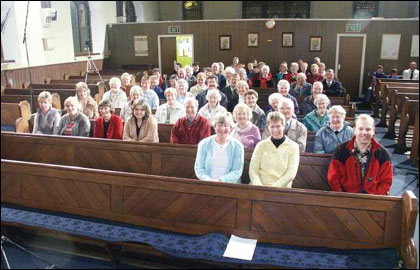 You can never really know for sure – until the service is actually underway – how your congregation will respond during a time of corporate worship. Try as we may to predict what songs will really “work”, or when we might need to say something, or how the Holy Spirit might be prompting us in unplanned directions, we can’t be 100% certain until we’re in the middle of it. And even then it’s not always so clear!
 Worthily Magnify