Cold Turkey for Easter

This past weekend I decided it was time to break my addiction to chord charts. Yes, it was Easter weekend and I was leading the music at five services, but after the first service on Saturday night I realized that if I wanted to play the piano more creatively and lead the band and congregation more skillfully, it was the right time to do it.

So with the exception of a song we did that was Psalm 98 set to music, I led four Sunday services with no music in front of me.

I knew the chords. Once in a while I would forget how a certain chord progression was supposed to go, but since I wasn’t the only one playing, I just relied on the band in those moments until they jogged my memory.

I (mostly) knew the words. Every now and then I’d glance at the screen if I forget how the next verse of a song started, but most of the time I didn’t need to.

I knew which ones I didn’t know well. Like I said before, there was one song I didn’t know well enough to lead from memory, so I made sure I had music in front of me for that one. But as for the other songs, I didn’t need the music, so I went without. And I was fine.

I was able to play more creatively and sensitively because I wasn’t compulsively staring at a piece of paper the entire time. Being freed to play from my heart allowed me to try different things, play less, and enjoy it more.

And I was able to lead the band and congregation more skillfully because my attention wasn’t being directed towards a chord chart as often. I could look around, make eye contact with band members, and concentrate more on what we were singing and what God was doing.

I’m going to continue working on trying to break my addiction to chord charts. I’ll need to make sure I’m comfortable and familiar with the songs’ chords and lyrics, and be smart enough to know which songs I shouldn’t attempt to lead from memory. But I’ve gotten much too accustomed to not simply referring to chord charts occasionally – but staring at them mindlessly and unnecessarily. It’s a bad and unhealthy habit.

Of course it’s a good idea to rehearse with the music in front of you so you can learn it. And then once the service starts it’s probably smart to have it close by. But if at all possible, get comfortable enough with whatever songs you’re leading that you could get through them competently even if a gust of wind knocked your music stand down.

Now, if you’ll be less effective at leading your worship team and congregation, and play less skillfully if you don’t have music in front of you, then you should probably keep the music in front of you. But perhaps you can start by leading one song without music – or one verse or chorus – whatever you can do.

But if your affection for chord charts is limiting your effectiveness as a worship leader, then it’s probably a good idea to learn how to live without them.

Don’t Overreact to Minor Course Corrections

I have a love/hate relationship with paddling a canoe. On the one hand I enjoy spending a warm summer day on a river or a lake with friends and family, having a picnic on the shore, and gliding through the water, but on the other hand I don’t enjoy the prospect of tipping over, the sore arms, and trying to maneuver the canoe and make it go where I want it to go. Just when it starts to head in the right direction, it veers left and I have to paddle hard on the right, or vice versa. I’m constantly paddling on different sides in hopes of correcting course.
Growing as a worship leader is a bit like paddling a canoe. You know what general direction you want to go in (hopefully), you know the basics of how to get there, you have some knowledge of what you need to do, you know that a good deal of responsibility has been entrusted to you, at certain points all you’re trying to do is keep from sinking, you can get discouraged when you see other people around you having an easier time, and it’s not as easy at it looks.

Another similarity between growing as a worship leader and paddling a canoe is that worship leaders are constantly in need of minor course corrections. From time to time you might get totally flipped around or capsize and need major help. But most of the time, you’re doing a pretty good job of doing what you need to do, and you just need to periodically adjust your course so that you don’t collide with a tree.

Minor course corrections can come in many forms for worship leaders. Here are some ways I’ve received these little nudges from time to time:

  • My wife telling me that I looked frustrated when I led an unresponsive group of people
  • My brother letting me know that I had a bad habit of glaring at musicians when they made a mistake
  • My pastor cautioning me that when I interjected in-between lines of a song I could sometimes sound bossy
  • A friend warning me that I was trying to force change too quickly
  • A worship team member mentioning that we were doing too many similar-sounding songs from the same writer
  • A mentor telling me that I shouldn’t be so timid when I spoke
  • A sound engineer pointing out that I was over-playing and singing flat

It can be awfully tempting to overreact to minor corrections as if they mean we are terrible worship leaders, we have no idea what we’re doing, and we should just give up. But that’s silly. It would be a like a man paddling a canoe, realizing he’s drifting towards the bank, and then instead of simply correcting his course and continuing forward, he calls his wife to tell her he loves her one last time. That’s an overreaction.

There are definitely times someone gives you advice, and it’s bad advice. And there are times you receive criticism and you just need to ignore it. But God oftentimes uses people who know us to give input into how we can grow. The next time someone approaches you and suggests a way you might be to improve as a worship leader, don’t overreact. Ask yourself: “is this a minor course correction?” Most of the time it is. When we ignore these kinds – we end up in need of more serious help.

When you sign up to be a worship leader, answering God’s call on you to serve the church in this way, understand that you’re embarking on a never-ending journey of growing, maturing, gaining experience, making mistakes, receiving correction, keeping your eyes on Jesus, adjusting your course from time to time, and the occasional capsize. It’s not always easy, but God is always faithful. Keep paddling.

The Many Smiling Faces of Kathryn Scott

Those who look to him are radiant, and their faces shall never be ashamed.” (Psalm 34:5)

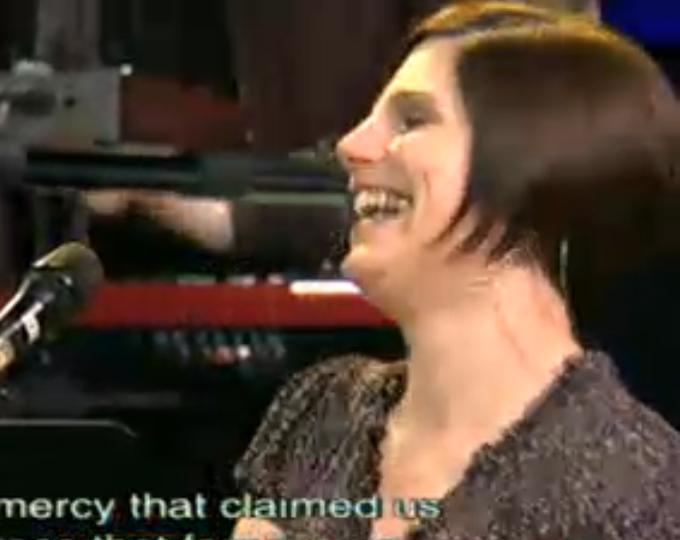
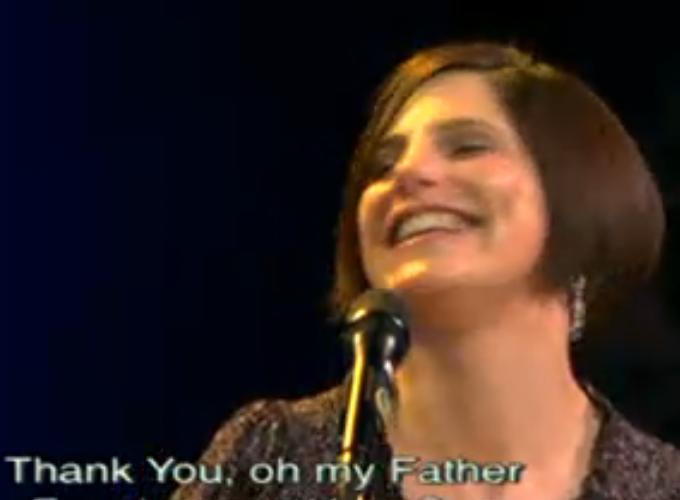
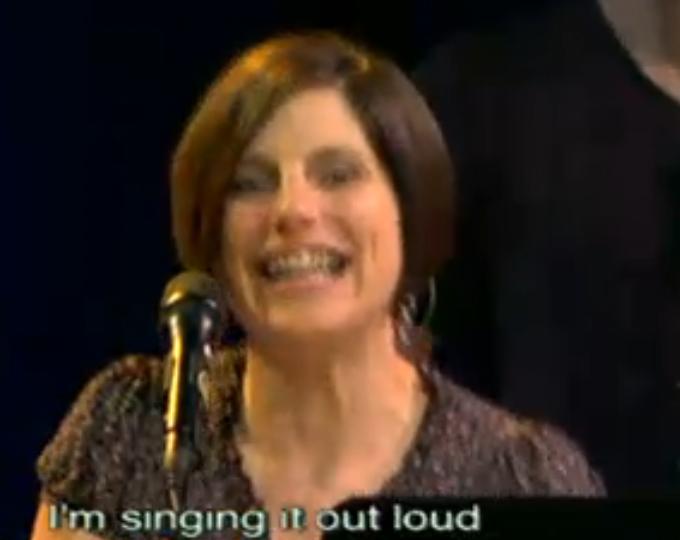
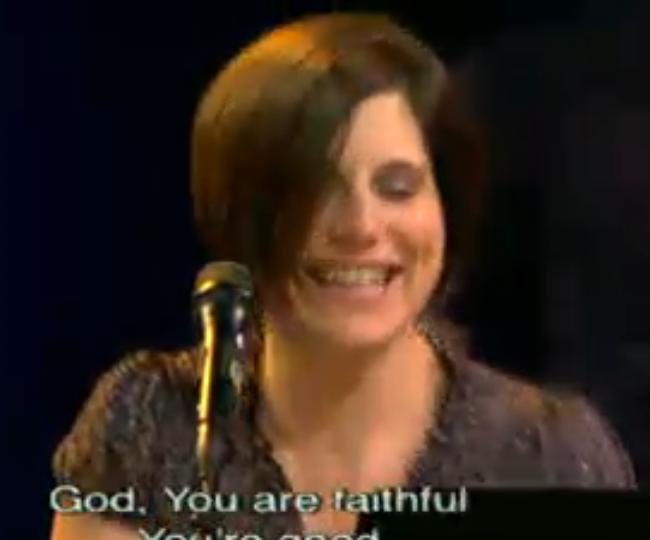
A few weeks ago I was watching a worship service online that had Kathryn Scott as the guest worship leader. I’ve always enjoyed her songs (she’s best known for her song “Hungry (Falling On My Knees)”) but had never seen her lead worship before.

I was struck by the joy, enthusiasm, and smiling that permeated her leadership. Here are a few snapshots:

I’ve been told that I oftentimes look really intense, sometimes a bit angry, when I lead worship. I could learn a lot from Kathryn’s genuinely joyful example. What a difference it makes and what a message it sends!

Don’t be fake when you’re up front – plastering on a smile or putting on an act. Worship God genuinely and whole-heartedly, and model to your congregation God-centered worship.

But remember that what we’re celebrating and proclaiming each week is that God has rescued sinners through Jesus Christ – this is the Gospel, this is “good news” – and it’s worth smiling about!

Getting Experience Makes You Experienced

Every worship leader has to start somewhere: as a beginner. There’s no secret fast track to become seasoned, no easy way to learn hard lessons, and no short cuts through the long process of maturity. Every worship leader, at some point, is at square one. How does a beginner worship leader become experienced? By getting experience.

The process of becoming an “experienced” worship leader never ends. I do not claim to have “arrived” at some sort of final point of maturity or expertise as a worship leader. Have I grown in the last fourteen years? Yes. Do I still have room to grow? Oh yes.

To a beginner, just-starting-out worship leader who wants to grow but doesn’t know how, I would suggest two simple things:

First, say yes to every single opportunity
If someone asks you to lead music for a vacation bible school, some songs for a small group meeting in a basement, a time of singing at a student ministry bar-b-q by the lake, a senior’s ministry breakfast at IHOP, or a song at the bedside of a dying woman in the hospital, say yes.

It might be the most awkward experience of your life. Maybe no one will sing. Maybe you’ll fail miserably. It doesn’t matter. You’ll learn so many more lessons from leading worship in as many different settings as you can, then you ever will by reading a blog or going to a conference. Seek out as many possible venues, settings, age groups, traditions, and occasions as you can.

The worst thing that can happen is you’ll learn a lesson. That’s called becoming experienced.

Second, have mentors
I remember the time I left a service so frustrated by the congregation’s lack of participation, enthusiasm, and physical expressiveness. That afternoon I shared my discouragement (and how it was all spiritual warfare!) with one of my mentors, a pastor friend who had been in the service the morning. He listened and said to me: “let’s go to Starbucks”.

He then proceeded to, gently but firmly, tell me that I was developing some bad habits as a worship leader that were beginning to grate on people. I was going on for too long, talking too much, demanding certain physical responses, and being more of a “presence” than I needed to be.

Gulp.

I asked him “have I caused real damage?”, and he responded “no… but you might if you keep it up for much longer.” He then encouraged me about things I was doing well, and ways I was displaying maturity and humility. He wasn’t harsh, but he was honest.

If you want grow as a worship leader, you need people who you trust, and who love you, who can be honest with you. They’re not just expressing an opinion or criticizing you for the fun of it. They have your growth and development in mind, and they have been given the freedom to give input into your life.

Seek out two or three people, preferably older than you, and regularly ask them for an hour or two of their time.

These two things: regular hands-on worship leading experience, and honest and loving critique, will, by God’s grace, result in steady growth and maturity.  

Handling Awkward Moments – A Medical Emergency

This past Sunday at my church, I was sitting in the congregation and listening to the sermon, when I noticed an individual stand up and walk towards the back of the room. I thought it was an odd time for this person to leave since the sermon was almost over, and I also thought it wasn’t very discreet since they were sitting directly in front of the preacher!

About 15 seconds later, a huge gasp arose from the back of the room as this person proceeded to faint, fall onto the laps of a couple people, and end up lying on the floor.

Thankfully, we have several doctors and nurses who attend our church, two of whom were sitting within arm’s reach of where the individual fainted. We’ve also prepared for this kind of incident by installing emergency 911 buttons at our sound desk, and training our ushers how to respond. This person was taken to a hospital within minutes and released that afternoon, but it was still a huge disruption to the service.

It’s impossible to know when a service might be interrupted by a medical emergency. But it’s good to think through how you should respond. Bill Haley, one of our associate pastors who was preaching, handled it like a pro. Here’s what he did:

Don’t pretend it’s not happening!
Bill recognized he has lost the attention of the room, and that someone needed help. To continue with his sermon would have been futile and foolish. He could pick up his sermon later, but he had to address the emergency first.

Ask if there are any doctors in the room
Bill was in mid-sentence when the person fainted. After hearing the loud gasp and seeing that someone had fainted, he immediately said: “are there any doctor’s in the room?” Seconds later, an ER doctor and a handful of nursed were at the person’s side. Bill had the advantage of a microphone, and he used it well.

Pray
Once this individual had medical attention and 911 had been called, Bill said: “let’s pray”. He led the congregation in praying for the person until they were being carried out of the room.

Slowly get back to where you were
After this person was taken out to the lobby, he reassured people that he would update us on their status at the end of the service, encouraged us to keep praying for her, reminded us that God was in control, and slowly transitioned back into his sermon.

Recognize that the dynamic in the room has changed
I had planned to follow Bill’s sermon with Enfield’s arrangement of “Crown Him with Many Crowns”. Knowing that people were still shaken up and distracted, we changed the arrangement on the fly to be a bit more laid back and less aggressive. To follow a medical emergency with a rock version of a hymn could have been perceived as insensitive and jarring.

One thing that Bill did that ended up adding to some of the confusion was to ask intercessory prayer team members to go lay hands on the person who had fainted. This resulted in too many people being around, and required the doctor and nurses to tell people to go back to their seats. Next time, I’d ask people to extend a hand towards the person from their seat, but to leave room for the professionals to do their job.

I may never have to deal with this particular scenario again, and you may never face this kind of “awkward moment” in one of your services. But when you’re dealing with a group of people standing up and singing for long periods of time, a variety of ages, 52 Sundays a year, and just plain old odds, it’s most likely going to happen someday.