
Are You a Chronological Snob?

In nearly every culture, for each generation, and in all areas of our lives, there is a temptation to think that whatever is newer, whatever is novel, and whatever is most recent is better than what is old. Sometimes this can be true. But not always.

C.S. Lewis felt this temptation in his time and in his culture. The intellectual community did then what it also does now, which is to embrace the new simply because it’s new. He noticed that he had this attitude and labeled it “chronological snobbery”. Here’s how he described it:

uncritical acceptance of the intellectual climate of our own age and the assumption that whatever has gone out of date is on the count discredited.

In short, a mindless embrace of the new and a discarding of the old. This is chronological snobbery.

We all feel this temptation every day of our lives. And while there are certainly cases where newer is better, most of the time if we stopped to think about it, we wouldn’t discard the old so quickly.

I feel this temptation as a worship leader, and I know that you do too. I feel it in all sorts of areas, but especially in the area of song selection. Sadly, way too many worship leaders unknowingly become chronological snobs and in the name of relevance discard hundreds and hundreds of years of rock solid hymns, not to mention hundreds of songs from the 1950s – 2000s that don’t have that new car smell anymore. This is a shame. And if we think this is just what happens as things “develop”, we’re mistaken.

Check out this quote from G.K. Chesterton:

Real development is not leaving things behind, as on a road, but drawing life from them, as a root.

I like that. You can either see yourself as driving down a road, where what’s behind you is not exciting as what’s ahead, or you can see yourself like a tree, drawing life from good roots that run deep.

If you’re a worship leader and you think more in terms of a tree and roots, odds are that you need a different sort of encouragement, and that would be to cut off some dead branches and do some pruning, because sometimes you’re trying to suck life out of something that’s just plain dead.

But if you have the opposite problem, and you never look back (but if you do look back it’s not very far) you might want to rethink how you view hundreds and hundreds and decades and decades of songs. If your repertoire doesn’t have a substantial number of time-tested songs and hymns, with deep truth and sound doctrine, you might be guilty of chronological snobbery.

This a big topic and every church and worship leader has their own view of what the proper approach is to balance new and old. Some only do new, some only do old, some try to do both, and some just haven’t thought about it that much.

Whatever your situation, we could all benefit from thinking about it a bit more. Is newness an idol for us? Should something that’s a bit outdated just be discarded? How deep are our roots?  

Resist the temptation to mindlessly embrace the new and discard the old. (The converse is equally as true and important: resist the temptation to mindless discard the new and embrace the old.) We should be moving forward, we should be growing, and we should be developing as the Holy Spirit is at work in us and in the Church. But always with roots and never as snobs.

Singing and Prompting

It’s the little things that make a big difference when you’re leading worship. One of those little things is whether or not you keep your volume consistent when you’re singing and when you’re prompting the congregation.
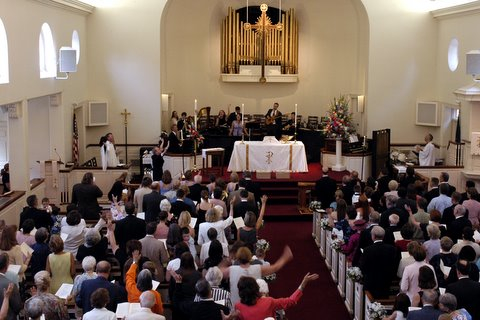
I’ve heard some worship leaders who sing at a good volume, but then when they give direction (i.e. “let’s sing that again” or “from age to age he stands”) you can’t hear what they’re saying. They back off the mic, they speak softly, and they confuse more than they help.

More often than prompting too quietly, worship leaders really crank up the volume when it comes time to give some direction. They sing at a certain volume but then all of the sudden they loudly interject. Of course this is distracting to the congregation, not to mention frustrating for your sound engineer, and it’s something that many worship leaders don’t realize they do.

Your sound engineer can help you maintain a steady volume between singing and prompting by making sure you’re using good mic technique and also utilizing compression at the board. But worship leaders still have a responsibility to avoid changing their volume on a whim and suddenly either dropping out of the mix or jumping in really loudly.

This might not be such a big thing to worry about if you’re leading in a room that has a good sound system with a skilled sound engineer who knows how to dial in compression to help the worship leader’s voice be heard, not too loud, and not too quiet.

But oftentimes worship leaders are leading in small rooms, and the “sound system” might either consist of a microphone, some speakers in the ceiling, and a mixer designed circa-1983, or maybe no sound system at all. It’s all the more essential in these kinds of settings that you make sure you’re singing at a good strong volume, and then when you prompt the congregation, they can hear what you say without having to strain to hear you, or without feeling like you’re barking at them.

Every human voice is unique, every room in which you’ll lead worship is unique, and every church has a unique combination of sound engineers (paid or volunteer) and equipment. Combine all of these factors, and worship leaders have to take a lot into account when they step in front of a group of people on an any given morning or evening.

Regardless of the setting, always be mindful of the little things, the basic things, that make a big difference. Having a consistent volume and being easy to follow is essential to effective worship leading. 

Leading Worship at Weddings – Part 2

A couple of weeks ago I shared some tips about leading worship at weddings. For me, it’s a relatively normal thing to have worship songs at a wedding, and my post assumed it was normal to you too. But I received an email from someone with a question about this, which showed me that it might not be such a normal thing to people after all. He said:

Hey man I’m getting married this fall. Until you mentioned it, I never heard of singing WORSHIP SONGS at a wedding – like for the congregation. Never heard of that. Can you describe that a little more? Like give an example of a couple songs that are “wedding appropriate.” How does it fit into the ceremony? 

Thanks man! I kinda like this idea…. 

Here’s a bit of what I shared in reply.
Some wedding ceremonies are short, sweet, and to the point. You’re there to see the bride walk up the aisle, hear the preacher say some nice words, maybe hear a ballad of some sort, hear the bride and groom say their vows, see them kiss, and see them walk down the aisle as a married couple. 20 minutes and you’re done. The real party (the reception) can now begin! Not much room for worship songs in there.
There are benefits to that kind of wedding ceremony. But the two main negatives that I can see are that (1) it makes the bride the center of the universe and (2) it’s not a worship service.
I’m of the mind that a wedding should be a worship service, and that Jesus should be the center of it. This makes it a bit longer, makes non-Christian friends/family feel a bit more uncomfortable, and adds new questions/needs to a couple’s already long list.
In the Anglican church, here’s how this looks. (You can see the liturgy here.)
Pre-service:
Instrumental music is played while the guests arrive and are seated.
Procession:
When the bride enters, the people stand, and a more robust (and brief) musical piece is played until she reaches the front
Opening words:
The pastor address the congregation and the couple. He explains that God established the covenant of marriage, that it signifies the union between Christ and his church, that it is meant to last through prosperity and adversity, if God wills it to produce children, and not be entered into lightly or unadvisedly. He then gives the congregation and the couple one last chance to name any reason why the marriage should not go forward. (This is always a fun moment.)
Declaration of consent:
The pastor asks the bride and groom if they will have each other to be their spouse for the rest of their lives. He then asks the congregation if they will support the couple.
Songs of praise:
It is here where a time of worship can be included. The wedding party can step down from the platform and stand in the front row while the bride and groom either step to the side or also down from the platform. It can be just one song, or several, whatever works best. I would recommend familiar, truth-filled songs. This is a great way to preach the gospel to your non-Christian friends and family. What are they going to do? Walk out of your wedding?
The ministry of the word:
2 or 3 scripture readings are presented by family members. You can do special or congregational songs in between them if you’d like, or if you think this is a better place than after the declaration of consent.
The homily
A fancy word for “short sermon”.
The marriage:
The man and woman exchange their vows. Then they exchange rings. Then the pastor joins their hands together and prays a blessing over them, ending with “Those whom God has joined together let no one put asunder”.
Prayers:
The very first thing that happens after the couple is married is not a kiss or a song or a party – but a prayer. This is symbolic. Usually the Lord’s prayer is prayed (unless the service ends with communion, in which case it’s omitted), before moving on to a time of prayer that either the pastor can lead, or friends and family can lead. In some wedding, parents and siblings will come up and lay hands on the couple.
The blessing:
The husband and wife kneel, and the pastor prays a final prayer of blessing. Then the couple may kiss, the congregation usually celebrates, the music kicks up, and the couple and the wedding party process back down the aisle and the service is over.
If you want to include communion in your service, it would happen here. Instead of processing down the aisle, there would be what we call “the passing of the peace”, a special song, then a time of communion. This is another place where songs of praise can be sung.
The result is a longer, more complicated wedding ceremony. But hopefully it helps set a tone for your wedding day, your marriage, and your family, that God’s glory is the priority, and Jesus is the center, even on the most important day of your life.

Waiting Until the Song is Really Finished

There are two extremes when it comes to leading songs in corporate worship. One extreme is to spend too much time on a song and sing it for so long that people are sick of it. Another extreme is to plow straight through each song and hurry along without any consideration of whether the Holy Spirit might be giving different directions.

I shared some thoughts a few months ago on how to protect against the first extreme. Today I’d like to offer some encouragement to you if you seem to experience the latter problem (i.e. plowing through songs) instead.

As a worship leader, I notice this on my worship team when I hear the rustling of pages behind or beside me when we’ve finished the last verse or chorus of a song. I know that my fellow musicians are just trying to be ready for the next song, but many times they’re jumping the gun. I’m sensing the Holy Spirit directing us to linger on the song for a while, to go back and do a certain section again, and when I start to do that, my team isn’t with me. They’ve moved on before the song was really finished.

I notice it in myself too. I can get in a hurry when I’m leading, or get anxious, or be so focused on how we did it in rehearsal, that when the last verse or chorus of a song is done, my mind and my fingers and my heart have moved on. We launch into the next song and miss an opportunity to respond to God’s leading.

So I’m guilty of it, my worship team is guilty of it, and if you’re a worship leader, then you’re guilty of it too. Sometimes we have good reasons to move on quickly (i.e. honoring our pastor’s request to keep to a certain time), but most often we don’t have a good reason at all. We aren’t paying attention to the Holy Spirit’s leading.

Stop talking and listen
One way to be really bad at having a good conversation with people is to be thinking about what you’re going to say next as opposed to listening to what the other person is actually saying. The same principle applies to worship leading. Of course we know what song comes next and we’re thinking through how we’ll get there, but are we listening to the Holy Spirit at all? Sadly, sometimes the answer is no. Effective worship teams and worship leaders learn how to lead/play/sing while at the same time listening to the Holy Spirit.

Practice spontaneity
If you lock all your arrangements down 100% at rehearsal, then you probably will need to plow through it during the service. There are times this is necessary, and the larger your team (i.e. if an orchestra is playing with you) or the more complex your situation (i.e. a video is accompanying the song) the more likely you’ll need to stick with the script. But I hardly ever tell my worship team that we will absolutelydo a song a certain way. I might say we’ll most likely or almost certainly do it a certain way, but I try to resist locking everything down too tightly. Rehearse well and talk through how you’ll most likely do things. Leave yourselves some wiggle room, practice being spontaneous, and talk through how you’ll cue them to where you’re going. They’ll get used to it.

Don’t try to squeeze in a ton of songs
If you have 20 minutes and 5 songs, then there’s not really any room for lingering. 4 minutes each and you’re done. Picking too many songs for a certain amount of time usually results in plowing through them. Pick 4 songs instead and then you have 5 minutes for each one. Or try picking 3. You might not take 20 minutes, but maybe you will. You’ve left some space and some freedom for not having to rush through the songs.

Learn to savor
When I eat vegetables, I eat them as quickly as I can. This is because I hate vegetables. But when I eat a really good steak, I savor it. I eat it slowly. I don’t want it to end. I’m sad when I’m done with it. Why would I rush through a meal that I love? What’s the hurry? Well, maybe dessert, but you get my point. Worship leaders and worship teams that savor (or “enjoy”) God’s presence, will be more able to sense his leading.

As an aside, this is why monthly or bi-monthly worship team gatherings are such a necessity, and why having an unhurried time of singing and “practicing the presence of God” at those meetings will benefit your team immensely. If you’re learning to savor God’s presence and discern his leading when you’re not up front, you’ll be more comfortable with it when the weekend services come.

See it modeled
Some things can be taught and other things need to be caught. If you aren’t comfortable arranging songs loosely or throwing in unplanned repeats at the leading of the Holy Spirit, I would encourage you and/or your team to see it being modeled. The Sovereign Grace Worship Conference is a great place to see this and learn how it can be done effectively. Or find other worship conferences or worship leaders who seem to “get” this.

Relax
Few things will hinder you more as a worship leader than being in a hurry. The major reason why a lot of worship leaders hurry and rush through songs is because they’re afraid that if they leave space, or even a few moments of silence, people in the congregation will get impatient or start looking around at each other like the worship leader has no idea what’s supposed to happen next.

Relax. They aren’t going to think that. (If they do think that, it doesn’t make any difference, by the way.) Take a few moments, or even longer, and before you move onto the next song, listen to whether or not the Holy Spirit is telling you to go back. These can be some of the sweetest times of corporate worship, so let’s try to avoid plowing through them if we can.

Leading Worship at Weddings

This afternoon I have the privilege of playing piano and leading the singing at the wedding of some friends at my church. It’s always a joy to be a part of a wedding, but it’s even better when you actually know the people! Leading worship at a wedding can be tricky, so I thought I’d share ten lessons I’ve learned over the years.

Make sure they’re Christians
When I first started getting asked to lead worship at weddings, I always said yes. Then I showed up at a wedding when I wasn’t even sure the bride and groom were Christians. The Mother of the Bride knew me from church and asked me to sing, and I accepted since I was flattered and eager for some extra cash. But I should have declined, and now I always make sure the couple are Christians and committed to a church.

Be clear about what you will and will not sing
At the same wedding I was just talking about, I was asked to sing one of the worst songs in the history of the world. I don’t even remember the name of it, but it was a John Tesh song with the line, “there’s nothing I wouldn’t do to make you my wife”. Could there possibly be a more awkward line to sing at a wedding? Well probably. But who am I supposed to look at as I sing that line?

Needless to say, now when I’m asked to lead worship for a wedding I’m clear from the beginning that I will only sing hymns or worship songs. If they want a song outside those genres, I’ll have to read the lyrics first and think about it. And in both cases, I need to be able to approve or decline their choices. (It’s helpful to give them a list of 15 – 20 hymns/worship songs that are most well-known, Gospel-filled, and wedding appropriate.)

Be honest about what you can and cannot play
I cannot play classical piano. If a couple asks me to do the music at their wedding, I tell them up front that if they want particular classical pieces for the seating of the family, bridesmaids procession, or bride’s procession, they’ll need to find someone else to play those pieces. I’m happy to play hymn tunes or make something up that sounds classical, but I can’t play the real deal. Most couples are OK with this. Some are not, and they want some genuine classical pieces played, so they find a friend or someone else to play those.

Talk about money
It is standard practice for the musician(s) at a wedding to be paid. You don’t have to be paid, of course, and you can tell the couple this when they ask. But the default is that you should be paid, anywhere from $100 – $250 or more depending on the situation and your experience. It can be awkward if you wait until the last minute, when the couple is dealing with a billion details, to talk about this. Just mention it at the beginning and get it out of the way. You’ll be one the least expensive things they have to worry about.

Don’t assume they’ll have sound reinforcement covered
I’m continually amazed at how people overlook the need for a sound system and a qualified person to run it. I also can’t understand how people think a microphone – on its own, no cables, no sound board, no amps, and no speakers, just a solitary microphone on its own – will magically project sound into a room. This is one of life’s greatest mysteries to me.

But people do overlook it, especially couples planning a wedding. Make sure they’re aware of your needs, whether it’s for a sound system, a sound engineer, equipment, etc. Don’t show up to the wedding and be surprised.

What about the lyrics?
Similarly, I’ve had occasions when I’ve shown up to the wedding, picked up the program, and been surprised by the lyrics the couple chose. Either they’re wrong, they’ve thrown in extra verses, or they’ve left random parts out. Send the couple the lyrics you want to use, and ask to see a draft of the program before they all get printed.

To attend rehearsal or not to attend rehearsal?
Should you be expected to attend the rehearsal and the rehearsal dinner? This depends on three things.
– First, do you want to? If yes, then go. If not, then…
– Second, does the pastor expect you to be there? If so, then you’ll probably want to go. If not, and he’s mainly going to run through procedure and placement with the wedding party (which is the case most of the time, in my experience), then you don’t need to go.
– Third, is it necessary? I’m usually comfortable showing up a couple of hours before the wedding, connecting with the wedding coordinator, talking with the pastor, and running through the songs, leaving plenty of time to get comfortable without having to give up my Friday night as well (and make a bunch of small talk too).

Going out of town
If you’re asked to lead the music for an out-of-town wedding, you’ll need to really consider whether or not it’s wise for you to accept. If you know the couple well or feel compelled to, then by all means do it. But if not, it is an awful lot of time, energy, miles, gas or airfare, hotel reservations, and hassle. You will also oftentimes end up losing money. To avoid this, if you accept an invitation to lead music at an out-of-town wedding, you would be wise to communicate up front that you’d appreciate an honorarium (be specific), and your expenses covered. And yes, this is totally appropriate unless it’s immediate family.

When it’s at a different church
There’s a rule, whether it’s written or unwritten, that the music director(s) at a particular church has “first dibs” on weddings at that church. Also, depending on the church, they will have certain rules about what kinds of songs and instruments can and cannot be played. If you’re invited to lead worship at a wedding at a different church, either you or the couple will need to contact that church’s music director and make sure he or she is comfortable with you doing the music, and with the music you all have planned.

Have realistic expectations 
Weddings are unique affairs. This is the day the couple has dreamed of their whole lives. Friends and family, many of whom don’t know one another, have all flown in from around the world and are sitting in one place. There are family dynamics that you might know nothing about. The ladies are in fancy dresses. The guys are in fancy suits. It’s an unfamiliar venue for most of the people. Many may not be Christians.

So have realistic expectations when you’re leading worship at a wedding. Some will sing, and others will stare at you with hostility. Some will seem genuinely engaged, and others will be taking it all in since they’ve never stepped foot in a church before. Don’t expect a huge response. Just serve them as well as you can, faithfully point them to Jesus, and don’t take it personally if you’re one of the few people singing. Just no John Tesh songs.