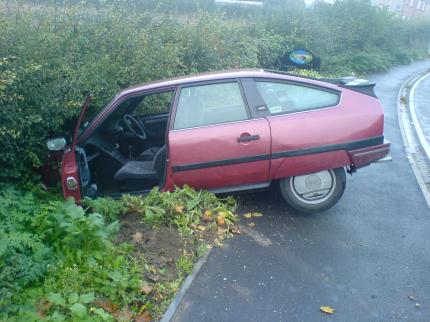
 It’s a terrifying feeling when you’re driving a car and something unexpected happens.
Someone starts to swerve into your lane.
A tire blows out.
You begin to hydroplane in the rain or snow.
But however the terrifying situations differ, one of the most basic pieces of driving advice remains the same: don’t overcorrect. Overcorrecting most often makes things worse.
The same principle applies to worship leading.
You can tell a song is bombing.
Your drummer is playing in 6/8 instead of 4/4.
You’re singing one verse and the screens are projecting another.
The possibilities are endless. So many things can go wrong on a Sunday morning, and since you’re not expecting them, you could instinctively overcorrect. But overcorrecting most often makes things worse.
To overcorrect in a car usually means to steer the car wildly in one direction, then realizing one’s mistake, and steering wildly in the other direction, by which point your car might be rolling over or hitting a tree.
To overcorrect in worship leading usually means to make a similarly wild direction change. You abruptly stop a song. You decide to preach a mini-sermon. You decide to sing a 4 minute spontaneous song (I did this when I was fourteen in a little Episcopal church and it did NOT go well!).
You get the idea. And you’ve experienced what I’m talking about. You can feel yourself starting to lose control and so you’re tempted to do something drastic.
Now of course you never say never. It’s not that it’s never a good idea during worship to do something drastic. Sometimes that’s exactly what the Holy Spirit is saying to you. But, in my experience, most of the time your response to the unexpected things in worship should be to keep your car in your lane, keep it moving ahead, and make sure you get to your destination.
I would much rather get through a worship set alive, and review the snot out of it later, then decide to risk everything on making it work for goodness sake! No one single worship set is worth you causing a ton of commotion. Slow and steady wins the race. You’ll get to lead worship again next Sunday. Let a day go by, and when you’ve calmed down, look back at what went wrong. This will be safer for your congregation, for you, and yes, for your job.


 Every pastor is different.
 I usually don’t have very profound thoughts when I’m running. This is because I usually don’t really enjoy running. I do it because it’s good for me and I feel better when I exercise, but I’m not one of those guys who just loves to go out for a run. I think those guys are weird.
 Worthily Magnify