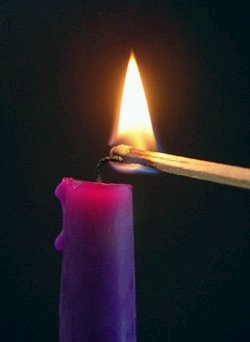
 This coming Sunday, December 1st, is the first Sunday of Advent. Liturgically, it’s the beginning of the new church year. Practically, it’s the countdown to Christmas. It’s a season of waiting, expectation, anticipation, and heightened awareness that a special day is on the horizon.
Some churches make a big deal of Advent and some churches skip over the whole thing and just start singing Christmas carols before people have even had a chance to finish their left-over Turkey. I’d like to make a case, in whatever church/denominational/liturgical setting you lead, that you try to aim for at least three things as you lead in Advent.
Build anticipation
The countdown to Christmas taps into a longing in people’s hearts that they might not even be aware is there. The presenting longing is for a fun party, or for some days off, or for time with family, or opening presents, but the underlying longing in all of us is to be rescued. We all want a Savior. If you think I’m crazy just watch people’s faces at political rallies. It’s nuts.
At this time of year, between Thanksgiving and Christmas, the weeks the Church has called “Advent” (for “arriving” or “coming”) for centuries, we’re crazy if we ignore the anticipation that everyone is experiencing, and attempt to skip over it and jump to Christmas too soon.
Wait until the last Sunday before Christmas, or even Christmas Eve, to sing Christmas songs. Sing Advent hymns, not Christmas carols. Light the Advent candles. Pray Advent prayers. Let the prophesies of the coming of Christ be read in your services. Don’t decorate your Sanctuary too soon. Intentionally hold off on bringing Christmas into things too early in the season. Build anticipation, even to the point of making people ask you why you’re waiting so long.
The point is to tap into people’s anticipation, and to remind them that the underlying longing is for a Savior. It will make Christmas (and Christmas carols) all the more sweet when you finally get there.
Express lament
A few nights ago I read a tragic story in The Washington Post about a murder/suicide about an hour’s drive from my house that claimed the life of a young mother and her infant while the 5-year-old daughter took a bath upstairs. She didn’t know anything was wrong until her Mom didn’t come to get her out of the bath, at which point she got herself dressed and then made the terrible discovery downstairs.
This kind of story makes me unspeakably sad. And angry. And confronted by the evil, sinful, brokenness that has infected this world. And I don’t know what else to pray besides “Jesus, please come back quickly.”
We all read news stories like that, or hear of yet another case of incurable cancer, or read of more threats of war, or see the villages in the Philippines completely wiped off the map in the latest typhoon, and deep inside of us we know it’s not the way it’s supposed to be.
Advent is a time when we can (and should) sing songs and pray prayers of lament, crying out to Jesus to come back, and to come back soon, and to “make the sad things come untrue”. If we skip past Advent without giving our people an opportunity to express these cries, we do them a disservice.
Let your people lament. And lament in hope. Because one day Jesus came as a baby and he’ll one day come again as King.
Give people space to be still
Christmas parties, travel, buying presents, wrapping presents, buying a tree, decorating the house, having a good time, baking cookies, hanging lights outside your house, raking leaves, keeping everyone happy, sweeping up broken ornaments, watering the tree, sending out Christmas cards, getting a family picture taken, baking the pie, trying not to gain 20 pounds, and oh that’s right try to make it to church too.
The weeks leading up to Christmas are the most insane weeks of the people in your congregation’s whole year. We all feel it. I’m feeling it this year especially as Catherine and I prepare to welcome baby girl # 3 on December 18th! And release two new albums (great Christmas present idea!), and manage the Andrew Peterson concert two days after our new baby comes, and the list goes on. All of us have our own long lists this time of year.
Wouldn’t it be a great gift to our people on Sunday mornings if we gave them some space to be still? Between songs. During a song. Between readings. After the message. During communion. Whenever.
Find some time in your services to intentionally leave some space for people to be still. Even just 30 seconds can be powerful. Just say something like: “This morning we’re aware that all of us are experiencing the usual pre-Christmas busyness and pressure and anxiety. We’re just going to take a few moments to pause, and be still, and enjoy God’s presence, and before we sing this next song let’s allow the Holy Spirit to help us to slow down. To rest. To remember our need for a Savior…” Something like that. It will bless people.
So whether you’re in a really liturgical church or a really informal church, I’d encourage you to use the season of Advent to help your congregation anticipate the coming of Christ and the coming of Christmas, to lament all the brokenness and sadness that we long for him to redeem, and to see Sunday mornings as opportunities to rest in the grace and love of God that’s displayed in the cradle, on the cross, in the empty tomb, and on the occupied Throne.
For previous year’s thoughts on Advent:
1. What to Do with Advent – Pt. 1
2. What to Do with Advent – Pt. 2
3. What Songs Work Well For Advent?
4. Two More Advent Song Ideas
5. A Contemporary Service of Lessons Carols
 You can learn a lot about a church’s theology of worship by watching what it does at Christmas time.
 Yesterday morning at our 11:00am service we were halfway through our opening block of songs when I heard a crazy noise coming out of the speakers that seemed to make the whole room jump. No, it wasn’t my drummer deciding to let loose. It was the sound board deciding to go nuts for a second. Before deciding to do it again. At which point the engineer made the decision to mute everything. And restart the board.
 This morning I spent two hours working on something really exciting.
 Worthily Magnify