You Need A Safe Place To Make Mistakes

I could fill multiple pages of this blog with mistake after mistake that I’ve made when leading worship. Some very minor. Some enormous. Some that made me want to run out of the room and never come back. Some that no one noticed. But I’ve made a ton of them and will make a ton more.

I’m not perfect and never will be. Neither are you. You’re going to keep making mistakes when you lead worship and if you’re hoping to arrive at a point when your worship leading is flawless, you’re never going to be satisfied.

The only way to keep from making mistakes when you lead worship is to not get out of bed on Sunday morning. Really. You’re bound to make at least (at least!) one mistake every time you get up in front of people. And this is OK. This is normal. And this is good for us.

Mistakes show us our weaknesses. They keep us humble. They remind people that we’re not perfect. They help us mature. They give us stuff to laugh at.

I remember one Easter a long time ago when I made a mistake in front of (at least) 1,000 people. We ended “In Christ Alone” and were supposed to go into a corporate prayer led by one of our pastors. The song ended and he wasn’t moving. So I started to say “we’re going to pray a prayer now…” just as he stepped forward. I saw him, stopped, tried to make a joke by saying “would you like to lead us in that prayer?” and it was just plain awkward. No one laughed. Crickets. I should have just given him another few seconds and it would have been fine.

Is this a big deal? Absolutely not. Does anyone in the world remember me making that mistake? Probably not. On the day I made that mistake, did I think it meant I was the worst worship leader in the world? Probably so.

There is no such thing as mistake-free worship leading. Of course we should seek to remove distractions and to lead as effectively as we can, but we’re still human. We’re going to forget a chord or forget a word. We’re going to get the persons of the Trinity messed up when we pray. We’re going to do a song too fast or too slow. We’re going to forget that little detail we talked about before the service. We’re going to repeat a verse too many times.

There are hundreds of possible mistakes we can make. For example, we could lead music for a Sunday evening carols service, including giving the message/sermon, all with your zipper down the entire time. I wouldn’t know anything about this, of course. Let’s just say this happened, hypothetically, last month. Hypothetically. Ahem.

Mistakes are inevitable, even for the “professionals”. It’s important that we realize this fact so that we don’t have unrealistic expectations burdening us as we lead.

It’s also important that we have a safe place to make these mistakes.

This has been, and is, crucial to my own growth and development as a worship leader. When I make mistakes, no one is threatening to take away my job, or attacking my character, or demanding I never mess up again.

This isn’t to say that I’ve never been called out on areas of immaturity or patterns of weakness that have been displayed over weeks and months. I’ve certainly had this – and need this – and you should expect and receive Godly, constructive counsel and critique as well. It’s good for us.

But sadly, many worship leaders don’t feel like they are safe to make mistakes. Either by their own internal pressure, or some outside force like a pastor or harsh critic or power bloc, they exist under a constant level of anxiety that is crippling.

Something’s got to give. Either you’ve got to become perfect or the expectations have to change. Which is it going to be?

If you’re looking for a worship leading job, look for a place where you’re safe to make mistakes and grow and learn. If you’re in a place where grace is extended to you and you’re allowed to mess up, thank God for providing this. But if you’re in a position where you don’t feel free to make mistakes, I’d like to kindly raise a red flag. It’s not healthy and it’s not realistic.

Worship leaders thrive when they have a healthy balance of freedom and feedback. Too much freedom and they can explode. Too much feedback and they can be crushed. Sometimes we’re fortunate and this atmosphere is provided to us. But sometimes we have to do some work to cultivate it. It’s important that we have the safety to make mistakes and the grace of God extended to us to help us mature.

Feed My Sheep: My Response to the “Waning of the ‘Worship Wars'”

1In a recent article entitled “The Waning of the ‘Worship Wars‘”, Christianity Today reported on the findings of the National Congregations Study, which you’ll find quite interesting if you’re involved in church music in any way. You should definitely read the whole article, but I’ll summarize a few of the big points here:

  • Since the year 2000, the use of bulletins, choirs, and organs has dropped by almost 10 percent (mainly in Evangelical congregations). The fading role of a choir is more pronounced in larger evangelical congregations (with more than 100 people), having dropped a whopping 33%.
  • In the same time period: “Applause is up 10 percent, raising hands and using drums are both up 14 percent, and the use of projection equipment is up by 23 percent.”
  • About 35% of congregations see an electric guitar on their platform (no word about banjos, as far as I could tell).
  • Fewer churches now hold multiple services with different worship styles. And just over half of American churches have more than one service on Sundays.
  • There’s also a noticeable trend towards informality of dress.

The full article goes much deeper and offers many more interesting observations on the state of worship in the American Church. The full study is definitely worth a serious read.

I wanted to offer a few reactions/thoughts for my fellow worship leaders as we look back at the trends of the last 15+ years, and look ahead at how we might remain faithful to Christ in the midst of some significant moves away from tradition.

Some of this is good
I would agree that there is indeed a sense (and now statistics to confirm that sense) that the worship wars have waned. Praise the Lord. I don’t pick up on the same level of combativeness and hostility in churches around the topic of music, and in my interactions with other worship leaders – even ones at churches with large/diverse music programs and styles – they share this experience (for the most part).

Some people are very glad about this
The trend towards informality, more traditionally “charismatic” worship expressions, the use of projection, the presence of electric guitars, and the slow decrease of the use of organs and choirs make many people very glad.

Some people are very sad about this
But many people are lamenting these trends and find the informality, technology, contemporary music, and loss of more traditional musical elements to be quite concerning and discouraging.

For sure, some people unhealthily idolize organs and choirs (just as some people unhealthily idolize bands and screens). But I would say that most people who prefer organs and choirs are not your stereotypical church curmudgeons. Many of them are sweet people who appreciate a thoughtfulness, reverence, preparedness, and weightiness in their corporate worship that, for them, are more prevalent when an organ and choir is at the musical helm of a service. We actually owe these people, and the values they rightfully extol, our pastoral care and attention.

Choirs and organs are hard work
Dare I say that one reason why the presence of choirs and organs in churches is becoming less common is that they’re a lot of work. Building, leading, and cultivating a good, healthy choir requires a director with the proper training, gifts, and temperament. Utilizing an organ requires someone who can actually play it (hopefully well), and oftentimes a lot of money to keep the instrument in playable condition and tune.

Sometimes (!) hard work is necessary
Many churches just don’t have the budget or capacity to give choirs and organs the attention they require. But some churches might throw the towel in too soon and too easily.

Could it be that choirs do actually provide a large cross section of the congregation the ability to contribute to singing in a worship leading role in a way that one or two mics does not? Could it be that a choir can actually encourage congregational singing when done well (and mic’d well)? So even if you really can’t support a choir like you used to in the 80s, could you not retool it and revamp it to work for today? Is there not someone willing to lead it? Many pastors/worship leaders might not be asking.

What about the organ? Maybe it doesn’t make sense for your church to buy/install one if you don’t already have it in your sanctuary. But if you have it, is there really no one available to play it, even once a month? No students close-by who would jump at the opportunity? You might not think it’s worth it to maintain a choir or an organ presence. And a lot of Evangelical churches agree with you.

But these two elements have been pillars of congregational worship for hundreds of years. We’re kidding ourselves if we think we can totally move away from two pillars without some crumbling happening. What will crumble if we completely ignore choirs and organs? Faithfulness to foundations, the participation of a wide swath of (mostly but not exclusively) our older members, musical fluency, a biblical embrace of variety, any sense of historicity in our gatherings, and a visible/audible demonstration of multiple generations joining in one voice.

It’s not necessarily the small churches who bear this burden, or the church plants meeting in a rented cafeteria, but the big churches for whom these elements are a part of their legacies, traditions, and even architecture.

I write this as a guy who doesn’t read music, doesn’t conduct a choir, and doesn’t play the organ. All during middle/high school and college I was the “contemporary guy”, coming with my guitar to introduce contemporary music. For ten years I led the “contemporary” service at a large Anglican church, and slowly tried to help de-polarize the worship culture there and help show that the addition of contemporary elements didn’t mean the subtraction of classical elements. And now I’m the worship director for another large Anglican church with a great legacy of choir and organ in its worship services, and I feel a great responsibility to show that this legacy actually means something; it can be built upon, as opposed to deconstructed.

The lies remain
While the hostility of the worship wars may have waned, certain lies remain: Contemporary and classical can’t coexist. Contemporary music is the way to reach young people. Traditional music is the only true way to please God. The organ is the king of all instruments. If we use projection, people will really worship. If we stop using hymnals, no one will keep singing.

On and on they go. A lot of misinformation was spewed out during the worship wars, and it’s still out there, though it might not be trumpeted as loudly.

Pastors and worship leaders can’t assume that people will just wake up one morning with a biblically robust theology of worship in their heads and hearts. Why are we singing? To whom is our singing directed? What is going on when we sing? Does it even matter if anyone in the room sings along? Why should we lift our hands? What is clapping all about? These are just some of the questions that, if answered well and wisely, will help our congregations not just stand there as spectators, but actually engage in robust congregational worship, whether it’s with a hymnal in their hands or an electric guitar on their stage.

We are at a new crossroads
About a year and a half ago I wrote an article entitled “Worship at a Crossroads: Congregationalism Versus Performancism“, and I believe this is even more relevant and important today, as I survey the ever-changing landscape of Evangelical worship.

I wrote then:

Style isn’t the issue anymore. It’s substance now. The “how” (i.e. what instrumentation will we use) has given way to the “so” (i.e. what is the end result of what we’re doing?)

The worship leading model of congregationalism says the “so” is: so that people will be engaged (actively).

The worship leading model of performancism says the “so” is: so that people will have an experience (passively).

Congregationalism is specific when it comes to the desired goal during the music: the congregation singing along with one another. Facilitating their singing is the worship leader’s number one priority.

Performancism is vague: the congregation is there to experience the experience, and if they happen to be able to sing along, then that’s great. But if they can’t sing along, then at least they had an experience.

This is the crossroads where we find ourselves.

It’s not about style anymore, though issues of style certainly flare up in many places with a good deal of noise. This conversation transcends style and begs a simple question: is the congregation’s engagement in worship integral or incidental?

This is the question that every single pastor and worship leader needs to ask themselves. Moving forward, if the results of the National Congregations Study are right and worship in the 21st century will be marked by informality, contemporary music style, and movement away from the expressions of the past (all of which happens every century, by the way), we have to decide if the congregation’s engagement in worship is integral or incidental.

I argue loudly and strongly for am embrace of a congregationalist approach to worship, and a rejection of performancism, in its flashy and subtle forms. Whether our churches are moving in tandem with the national trends, or whether our churches are very much traditional and classical, we have a responsibility to remain faithful to the charter Jesus set forth for Peter in John 21:17, and that is to feed his sheep.

Trends come and go. Expressions, styles, techniques, and fashions all change. They always will. Jesus remains. Let your congregation feast on him in song as the years and trends pass.
Five Ways To Make Rehearsals Shorter (And Better)

1Every church, worship team, choir, vocal ensemble, and instrumental section approaches rehearsals differently. Some go the mid-week route, others on Saturday morning, and others just before services on Sundays. Some have the luxury of their own practice/worship space, while others have to manage with a basement of someone’s home, or the cafeteria they rent on Sundays. Some have a full sound system with personal monitor mixes and bottled water put out for them, while others are lucky to be able to even find the light switch.

But for all of the different ways rehearsals can be approached, there is always room for improvement. Specifically, there is a way to do more in less time.

The length of a rehearsal does not necessarily positively correlate with the effectiveness of a rehearsal. Oftentimes, the opposite is true, and the longer (and later) a rehearsal goes, the less effective it is.

How you can make rehearsals shorter (and therefore better)? Five suggestions.

1. Start on time
7:30 p.m. means 7:30 p.m.. Even if you’re the only one there. Start when you say it starts. Expect people to get there early to set up, tune, and plug in. When 7:30 p.m. becomes 7:45 p.m., and chit chat pushes the start time to 8:00pm, then you’ve basically wasted a really good chunk of people’s day.

2. End on time
Never go longer than 90 minutes. Unless you’re preparing for a recording, or a major Christmas Eve service or event, never ever go longer than 90 minutes. Aim for 60 minutes. If you have to go longer, give people a 5-10 minute break halfway through.

3. Don’t rehearse stuff that everyone knows
This seems fairly obvious, but I’ve seen this kill more rehearsals/sound checks than you’d think. There are certain songs that everyone on your team/choir knows (and when I say “everyone” I mean 95%). Either skip over those, or just talk through them briefly, or just polish up the intro and ending. Why rehearse “Ten Thousand Reasons” for the ten thousandth time? There are ten thousand reasons not to.

4. Consolidate similar sections of a song 
You can get through a 4-minute song in 1.5 minutes if you realize that basically the verses are the same, and most of the choruses are the same, so let’s practice the different chunks of the song that are actually different. Start with the intro, do a verse, go to the chorus, then skip to the bridge, and then instead of rehearsing another final chorus (that everyone knows), just say “OK, that’s great. Thanks. Moving on…” Your musicians will thank you, and you’ll have saved more energy for the actual service. Saving a few minutes per song can result in an overall savings of 20 – 30 minutes. That’s a lot!

5. You decide when you’re happy
There will always be someone who wants to go back over a certain part again, or practice a transition again, or ask a question, or make a suggestion. That’s fine, but they shouldn’t have the power to drag out rehearsal for everyone else. You should feel comfortable (for the sake of making rehearsal shorter and better) to say “I’m happy with that. Let’s move on”, and if someone has a question or something they want to work on, you can do that with them separately once rehearsal has ended.

Show your musicians that you value their time and you’re aiming to be concise and effective, and they will end up wanting to give you more of their time. But conversely, show your musicians that you don’t value their time and/or can’t manage the clock, and that you’re not trying to move things along, and they’ll end up being more protective of their time and less likely to give it so freely. They’ll also come late.

Why aim for shorter and better rehearsals? Because fruitfulness always requires trimming. Trim the unnecessary stuff away, so there’s more room for actual growth and blossoming.

I’ve written some previous articles on rehearsals (some of which might say some of the same things!) that you can find in the links below:

Leading Effective and Enjoyable Rehearsals

Ten Ways to Make Rehearsals Fruitful

Five Common Rehearsal Killers

Four Types of Worship Teams

1This past Wednesday night we had the first “musicians gathering” at my church since I arrived 15 months ago. All of the different instrumentalists and singers who serve at our morning and/or evening services were invited, to what I intend to be the first in a regular/monthly series of get-togethers aimed at community-building, vision-casting, encouragement, and worship-culture shaping.
After munching on cookies and chips and salsa (the evening snack combo of champions), a rousing game of worship song charades, and a time of singing, I shared why we were all coming together like this. It’s definitely not because we all need more meetings, or more things to do, or more obligations. We’re coming together as worship leaders (I intentionally use that term broadly to include everyone who has a musical/audio/leadership role in a service) so that we can become a body.

In my experience with worship teams (either as a member or a leader of one), and in my observations of the worship leading landscape these days, there seem to be four different types of worship teams. Four ways you can go. Four approaches to how to structure, view, and lead a team.

The first type of worship team is just filling slots.

You need a guitarist? Tom is your guitarist. You need another guitarist? Oh, now you have Frank as another guitarist. And this month you need to find another singer to fill a slot. Let’s ask Sally to fill that slot. What about a drummer for the third weekend of the month? That would be Brian’s slot. He’ll be the drummer.

In this type of worship team, its members are names in Planning Center, their contribution is to fill musical slots, and the worship leader’s job is to fill all the slots so that he can have what he needs. If Tom decides to leave the church, nobody on the team really knows or cares, because you just replace him with Andy. Or if your drummer Brian breaks his arm and can’t play drums, the team isn’t really concerned for Brian, but more concerned that they get another drummer to fill Brian’s slot.

No one is being particularly built up, or connected, or encouraged, or cared for. Everyone is a name on a schedule.

The second type of worship team is a band.

You choose a name. You have a lead singer. You have backup singers. You have band members who all look really angry. You tour. You record. You perform. You have photo shoots. You’re cool.

In this type of worship team, the members are mini-celebrities, and the worship leader is the chief-celebrity, who stands about one foot in front of the rest of the band in the photo shoot. When new or less-skilled musicians join your church, their only hope of being involved in the band is if they somehow reach that high bar and wear the right kind of clothes.

This kind of worship team is difficult for the average musician to be a part of. And it’s a challenge to maintain over the long-haul, as members leave, or the budget dries up, or a decade passes and musical fads pass you by.

The third type of worship team is a caste/echelon-system.

There are upper echelons: playing and/or singing in Sunday services. There are middle echelons: youth ministry, retreats, young adults. And there are lower echelons: children’s ministry, seniors, or home groups.

In this type of worship team, members are always trying to climb to the top. Even if it means pushing someone down to get there.

When a more strongly gifted musician joins the church, other musicians are threatened, and have to protect their place in their echelon. Members in the lower echelons don’t believe their gifts matter or are appreciated. And the worship leader is constantly managing egos, dealing with hurt feelings, avoiding giving honest assessment and placement of gifts in the team, and potentially making or breaking someone’s identity simply based on where he schedules people.

The fourth and final type of worship team is a body. And Paul paints a picture of it in 1 Corinthians 12.

To summarize: In a body, there are varieties of gifts and service, but the same Lord. There are different gifts given by the Spirit, but all empowered by that same Spirit. It’s one body, with many members. The different members (like feet and hands) need each other. The different members (like ears and eyes) belong to each other. God arranges the members as he chooses. The weaker members are indispensable. Honor is bestowed upon one another. There is no division. When one member suffers, all suffer. And when one member is honored, all rejoice together.

That’s the kind of worship team I want to build!

But in my first 15 months at Truro, I’ve been filling slots. I’ve been the new guy, getting a lay of the land, getting to know people, auditioning people, orienting myself, plugging holes, and trying to get through all of the major ups and downs that a ministry year contains. And that’s all I could do. But it’s not a long-term ministry model.

I’m not interested (and I know the musicians at my church aren’t either) in just filling slots. Or building a band with a brand. Or managing a caste/echelon system and all of the egos and politics and territories that come with it. That sounds miserable to me. Because it is!

Helping build (and build up) a body is the way to go. It’s a worship team model that will endure.

I would argue that this is the model that will last the longest, include the widest spectrum of ages/experience levels/skill levels, allow for an easier on-ramp for new and/or weaker members, be more sustainable by the congregation itself, last after a worship leader leaves and hands the baton to someone else, and have the kind of spiritual and organizational health that will model something beautiful, humble, and Christ-centered from the platform.

Random musical feet and hands and eyes in a congregation won’t just magically coalesce into the shape of a body like a weird sci-fi movie. God arranges the members, the Spirit empowers the members, and good pastors (and worship leaders) help the Spirit-empowered and God-arranged members function as a healthy body in the way that God designed for the glory of Jesus and the edification of his Church.

Worship leaders: let’s all commit to doing what we can to foster a community of worship leaders at our churches that functions like a body. It’s not always the easiest or most glamorous way to go, but it’s the most fruitful.

Recommending “Sing the Bible with Slugs and Bugs”

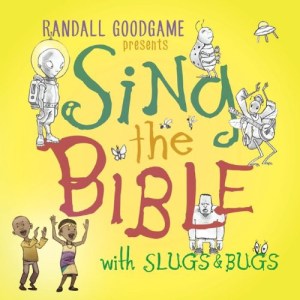
1If you have kids, know kids, once were a kid, are ever around kids, ever lead worship for kids, ever lead worship for people who are kids, or are currently a kid, you should most definitely buy Randall Goodgame’s album “Sing the Bible with Slugs and Bugs”. Buy it from www.slugsandbugs.com (or on iTunes).

It’s been out since February 2015, so I’m a little late to the game here. No one sent me a free copy, and no one asked me to review it, but my wife bought it over the summer and it’s quickly become our family’s soundtrack.

We listen to it with our kids in the car, or around the breakfast table, or when a bad case of the grumpies has infected the house.

I listen to it when I’m driving around town or running some of the trails behind my neighborhood.

And I’m using more and more of the songs when I lead our kids and families in worship at Sunday school in-between our morning services at my church.

It’s a great album. The music, production, lyrics, balance of silly and serious, catchy melodies, and sheer amount of bible content is excellent. Depending on the song, you’ll hear Randall joined by The Watoto Children’s Choir  – EDIT: The African Children’s Choir – , and/or Sally Lloyd Jones, and/or some of the best Nashville singers and musicians who just happen to be Randall’s buddies. Oh, and Dracula and some pretty jazzy bees too. Man it’s good.

I love all of the songs. In particular, I’m loving “For Us”. It’s a call and response song that helps kids learn 1 John 3:16. It’s singable, simple, easy, fun, and gets stuck in your head. And I think that’s the point.

Here’s a clip of one of the other great songs, “Two Shirts”.

Thanks, Randall, for the gift that this album is to me as a follower of Jesus, a lover of the Word, a husband and dad, and a worship leader too.