
Worship Team Mechanics: Auditioning

I want to spend a few posts this week on issues that worship leaders face with growing, managing, and maintaining their worship teams. Whether you’re in a small church with only a handful of musicians or a large church with a bunch of them, it’s important that you have a clear and thought-through process for how to steward the gifts and people that God brings before you.

I am not the expert of any of this. I am still learning, still making mistakes, and still trying different approaches. But I hope that some of what I say will be helpful. Today we’ll look at how to audition people well.

Why audition?
God gives different people different gifts. No two people are the same. Every church is made up of different people with different gifts for different purposes. If you’re a worship leader in a church, one of your roles is to steward these gifts, and help people with musical gifts discern how and if they are called to serve the congregation.

Set dates
I used to say that if people were interested in exploring serving on the worship team, they should email me. I’d then set up a time to meet with them. The problem with this was that I might have 5 or 6 different people all wanting to meet on different days and at different times. It was unmanageable. Now I’ll pick one Saturday afternoon every 3 or 4 months and announce that auditions will be held on those dates. I’ll schedule auditions a half hour apart, assuming each one will take about 20 minutes. This way I’m only giving up 2 or 3 hours.

By the way, I would strongly encourage you to carefully word your audition invitations. I wrote a post on this a while ago and you can read it here.

Email questions
Once someone gets in touch with you and expresses an interest, the very first thing I would encourage you to do would be to (1) thank them, and (2) ask them a few important questions about themselves. This is not an exhaustive list, but generally I find these 4 questions helpful:
– (1) Tell me your story of how you came to trust in Jesus Christ.
– (2) Tell me your story as a musician.
– (3) In what ways have you served in worship leadership in the past (if at all)?
– (4) Why do you feel called to this particular ministry.

Asking these questions over email is a good idea. This way you have it in writing. People start to blend in after a while, and this way you can remember who said what. Further, it keeps your auditions brief, since you don’t need to spend a ton of time with each person asking them detailed questions about themselves. They also have time to think it through.

You’ll learn a lot from these questions, particularly if you see any red flags (I wrote a post on red flags to watch out for and you can read it here). Be on the look out for people who can’t really articulate a faith in Jesus Christ (they’ll need some discipling before joining the team), or people who just want to play music because it’s fun (they’ll need to catch a passion for worshipping God and leading others in engaging with him).

Schedule auditions
I’ve found it helpful to then schedule people about 30 minutes apart. This gives me time to (a) meet them, (b) chat with them to make them comfortable, (c) ask them a few questions to get to know them, (d) audition them, and (e) get a few minutes’ break before the next person.

Explain to the people over email that you’ll be singing or playing through a few familiar worship songs together. If they need the music in advance, get it to them. If not, pick really familiar songs.

Interview the person
You’ve already asked them a lot of questions over email. Their answers might have given you some things to ask them about. I’d encourage you to ask them what brought them to your church, and to make sure they’re a committed member of the congregation. If they’re not, you need to communicate why that’s important, if it’s not already a requirement.

If it’s a singer, ask them if they normally sing melody or harmony. Can they make up harmonies on the spot? Can they learn by ear? Do they always start singing on the first word of the song? Do they wait until the chorus? What’s going through their minds?

If it’s an instrumentalist, ask them what they’re thinking. Is the bass player listening for the kick drum? Is the drummer listening to the bass player? Is the pianist stuck playing in the middle?

Whether it’s a singer or instrumentalist, explain to them that while skill is important, what’s more important is their heart, and what’s most helpful to you and to the congregation is to have a worship team of people who are clearly engaged in worship. You’re not looking for backup singers and musicians. You’re looking for worship leaders.

Set up the audition
First, put them at ease. If it’s a singer, ask him/her if they want any water. If it’s an instrumentalist, let them set their stuff up and offer to help. Make a joke or two. Most importantly, let them know that this is just a chance for you to get a feel for their gifting, and that they can just be themselves and not worry.

Second, explain that you want to respect their time and help them by being honest with them about whether you think their gift would lend itself to being used on the worship team. Ask them if that’s OK. Hopefully they say yes.

Run the audition
I find it helpful to tell them something like “I’m going to start this song, and you just come in where you usually would if we were doing this in a service”. This way you can get a feel for whether or not they have really good instincts, or whether they just jump in without much thought. Play through a song or two, sometimes stopping and letting them play or sing on their own, and take enough time to hear them sing or play for several minutes.

What to say if they’re gifted
If they’re gifted, affirm them. Tell them you’d like to explore finding a place for them to serve.

What to say if they need work
If they need work, affirm them. Tell them what was good. Tell them what wasn’t so good. Then tell them what was good again. This is what we call an “affirmation sandwich”. Then tell them a number of things they need to work on, and that you’d like to keep in touch with them as they improve.

What to say if they’re not gifted
If they’re not gifted musically, affirm them. They have taken time of their day to come meet with you. They are seeking to be obedient to a prompting they feel to serve the church. Thank them for their heart to serve the church. But then kindly tell them that it’s your impression that this is not the right place for them to serve. Be specific, be kind, and keep smiling at them. Let them ask questions. Understand that this will probably be awkward and that’s just the way it goes. Affirm them again, offer to help them find other places to serve, and let them go.

For some more of my thoughts on how to say “no” to people, you can read a post I wrote here.

Why you shouldn’t allow everyone who auditions onto the team
For some churches, the idea of auditioning musicians, much less turning some musicians down, is unheard of. A certain level of chaos reigns, where anyone and everyone who expresses an interest is allowed to come to rehearsals, allowed to stand on the platform, and allowed to play on Sunday mornings.

I know that the heart behind this is to give people a place to serve and to avoid a culture of perfectionism, but it completely rejects the commands in scripture to play skillfully (Psalm 33:3). It ignores the fact that not everyone has the same gifting and that the body of Christ is arranged with different parts and different members (1 Corinthians 12). The standard will differ depending on the church, but there must be a standard.

Be slow to add someone to the team
It’s much harder to ask someone to step down from the team than it is to ask them to join the team. If you think someone is called to serve on the team, try to find a small venue for them for a while and see how they respond. If they’re reluctant to serve in children’s ministry because they really want to be up front on Sunday morning, I would avoid using them.

No lifetime passes
Finally, communicate to all new and existing worship team members that no one has a lifetime pass to the worship team. Everyone serves for seasons. You might find it helpful to follow a school-year type approach. Each September you kick off a new year. Each June you have an end-of-year celebration. In the summer you keep using people, but you give people a chance to reevaluate whether or not they want to commit for another year. This also gives you a chance to reevaluate whether certain members should continue or not.

You’re At Your Best When You’re At Your Neediest

Several Sunday mornings ago I sounded like a frog. My voice gradually went downhill during the service (and it was a communion service so there were a lot of songs) so that by the end of the service, our sound engineer had turned me down almost all the way in order to spare the congregation from having to hear it any longer.

I wish I had a good reason (like a cold or a cough). I wish I had a Godly reason (like I had been singing praise for so long that my voice was lost). I’d even settle for a natural reason (like I hadn’t warmed up properly or something). The truth is that I sounded like a frog because at 3:00am in the morning, after four hours of trying to get our 21-month-old to sleep after she woke up, I lost my temper. I yelled at her.

I felt horrible. I felt like the worst father in the world. I begged Megan to forgive me (and, by God’s grace, she did and didn’t even know what I was talking about when she woke up). I was confident that God had forgiven me. But, the damage had been done, and since I had yelled, I had hurt my voice so much that I lost it during the service. And I lost it good.

Why am I telling you how I sinned a few weeks ago in the middle of the night by getting angry with my precious little girl? First, because it’s good for my pride. And secondly, because I had a choice on Sunday morning what to tell my worship team.

I had a few options. First, I could lie. I had already sinned by getting angry with Megan, so why not continue the trend and make up something Godly sounding? I figured that wasn’t a good idea. Second, I could just not mention it. Sure, I sounded terrible and needed the other vocalist on the team to pick up the slack, but they didn’t need to know, right? Wrong. So my last option was the best option and I let them know that their esteemed worship leader had just, 5 hours earlier, been an idiot.

This was good on a number of levels: it was a chance to “be real” with my team, it gave them permission to “be real” back, it was an object lesson in how much we need God’s grace and how freely he gives it even to bad-tempered-Fathers, and gave me an acute sense that morning of how much I needed God’s Spirit to fill me and empower me. I certainly couldn’t fake it that morning.

We ended up having one of the sweeter times of worship during our communion set that I can recall ever having. We finished “Mighty to Save”, and then, froggy voice and all, I sang a spontaneous song before we went back into the chorus. I heard numerous comments from people who were really affected by that time.

If I could go back and do it all over again, I certainly wouldn’t yell at Megan. But in a way, I’m grateful for this lesson. It taught me a lot about Fatherhood, about worship leading, about being real with my team, and about how much better things go on a Sunday morning when I’m really needy.

And here’s how it sounded. Not pretty, but real.

Waiting Until the Song is Really Finished

There are two extremes when it comes to leading songs in corporate worship. One extreme is to spend too much time on a song and sing it for so long that people are sick of it. Another extreme is to plow straight through each song and hurry along without any consideration of whether the Holy Spirit might be giving different directions.
I shared some thoughts a few months ago on how to protect against the first extreme. Today I’d like to offer some encouragement to you if you seem to experience the latter problem (i.e. plowing through songs) instead.

As a worship leader, I notice this on my worship team when I hear the rustling of pages behind or beside me when we’ve finished the last verse or chorus of a song. I know that my fellow musicians are just trying to be ready for the next song, but many times they’re jumping the gun. I’m sensing the Holy Spirit directing us to linger on the song for a while, to go back and do a certain section again, and when I start to do that, my team isn’t with me. They’ve moved on before the song was really finished.

I notice it in myself too. I can get in a hurry when I’m leading, or get anxious, or be so focused on how we did it in rehearsal, that when the last verse or chorus of a song is done, my mind and my fingers and my heart have moved on. We launch into the next song and miss an opportunity to respond to God’s leading.

So I’m guilty of it, my worship team is guilty of it, and if you’re a worship leader, then you’re guilty of it too. Sometimes we have good reasons to move on quickly (i.e. honoring our pastor’s request to keep to a certain time), but most often we don’t have a good reason at all. We aren’t paying attention to the Holy Spirit’s leading.

Stop talking and listen
One way to be really bad at having a good conversation with people is to be thinking about what you’re going to say next as opposed to listening to what the other person is actually saying. The same principle applies to worship leading. Of course we know what song comes next and we’re thinking through how we’ll get there, but are we listening to the Holy Spirit at all? Sadly, sometimes the answer is no. Effective worship teams and worship leaders learn how to lead/play/sing while at the same time listening to the Holy Spirit.

Practice spontaneity
If you lock all your arrangements down 100% at rehearsal, then you probably will need to plow through it during the service. There are times this is necessary, and the larger your team (i.e. if an orchestra is playing with you) or the more complex your situation (i.e. a video is accompanying the song) the more likely you’ll need to stick with the script. But I hardly ever tell my worship team that we will absolutelydo a song a certain way. I might say we’ll most likely or almost certainly do it a certain way, but I try to resist locking everything down too tightly. Rehearse well and talk through how you’ll most likely do things. Leave yourselves some wiggle room, practice being spontaneous, and talk through how you’ll cue them to where you’re going. They’ll get used to it.

Don’t try to squeeze in a ton of songs
If you have 20 minutes and 5 songs, then there’s not really any room for lingering. 4 minutes each and you’re done. Picking too many songs for a certain amount of time usually results in plowing through them. Pick 4 songs instead and then you have 5 minutes for each one. Or try picking 3. You might not take 20 minutes, but maybe you will. You’ve left some space and some freedom for not having to rush through the songs.

Learn to savor
When I eat vegetables, I eat them as quickly as I can. This is because I hate vegetables. But when I eat a really good steak, I savor it. I eat it slowly. I don’t want it to end. I’m sad when I’m done with it. Why would I rush through a meal that I love? What’s the hurry? Well, maybe dessert, but you get my point. Worship leaders and worship teams that savor (or “enjoy”) God’s presence, will be more able to sense his leading.

As an aside, this is why monthly or bi-monthly worship team gatherings are such a necessity, and why having an unhurried time of singing and “practicing the presence of God” at those meetings will benefit your team immensely. If you’re learning to savor God’s presence and discern his leading when you’re not up front, you’ll be more comfortable with it when the weekend services come.

See it modeled
Some things can be taught and other things need to be caught. If you aren’t comfortable arranging songs loosely or throwing in unplanned repeats at the leading of the Holy Spirit, I would encourage you and/or your team to see it being modeled. The Sovereign Grace Worship Conference is a great place to see this and learn how it can be done effectively. Or find other worship conferences or worship leaders who seem to “get” this.

Relax
Few things will hinder you more as a worship leader than being in a hurry. The major reason why a lot of worship leaders hurry and rush through songs is because they’re afraid that if they leave space, or even a few moments of silence, people in the congregation will get impatient or start looking around at each other like the worship leader has no idea what’s supposed to happen next.

Relax. They aren’t going to think that. (If they do think that, it doesn’t make any difference, by the way.) Take a few moments, or even longer, and before you move onto the next song, listen to whether or not the Holy Spirit is telling you to go back. These can be some of the sweetest times of corporate worship, so let’s try to avoid plowing through them if we can.

You Don’t Always Have to Have a Drummer

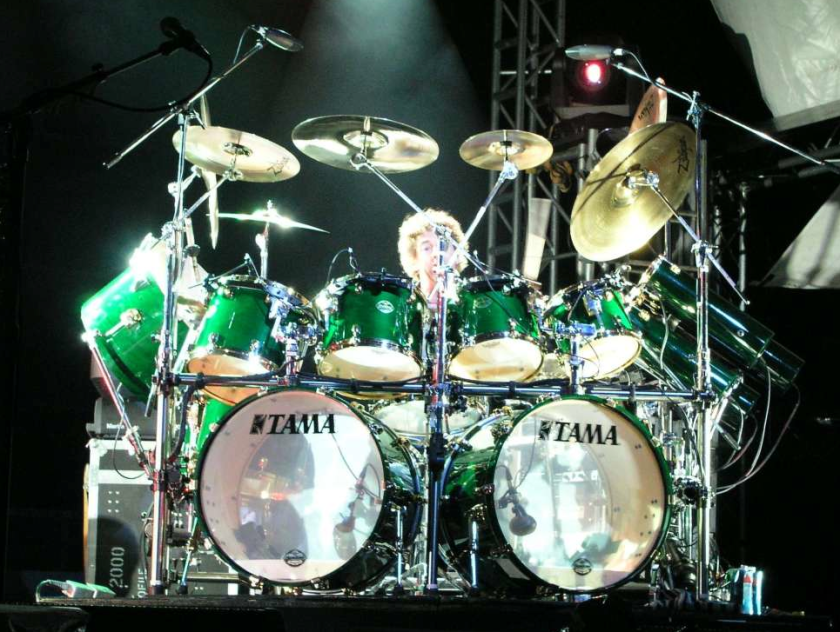
If I could have all of the energy back that I’ve spent over the last several years trying to round up a drummer for the weekend when my regular one is out of town or unavailable, I could probably climb Mount Everest. Seriously.

I wonder if you can relate. I have a good number of singers, and enough bass players, guitarists, and pianists to allow me to lead with a standard 5-6 piece worship team every Sunday. But drummers are harder to come by. Good drummers, I should specify. Since I’ve chosen to set a fairly high standard for drummers, there are middle school drummers and other less experienced drummers who might be in town that I don’t use.

And so I’m in a bind every once in a while and have every other position filled except for the drummer. So I email all the other drummers I know. I beg someone. I ask God to drop one in my office out of thin air. I use someone on the djembe. I offer to fly my oldest brother up from Florida to play drums for me (I actually offered this once…) I might eventually find someone but only after spending a substantial amount of time and energy.

And sometimes it’s what you have to do. Drums are essential to getting a certain “feel”, they are the backbone of the contemporary music sound, and they (hopefully, with a good drummer, and this is why you should have semi-high standards for drummers) hold everything together. Drums are crucial.

But drums can become a crutch for you, your team, and your congregation. But unlike a crutch that you actually need because you can’t walk properly without it, drums can become like a crutch that you don’t need, but you’ve just gotten so used to walking with it that you’re afraid of it being taken away. You don’t need drums. This might be news to you. It might make you shake with fear.

(For others out there, you know this, because you don’t have any drummers. A middle school drummer would be a welcome addition for you. This post isn’t so much for you, although you’re welcome to keep reading. This is more for those of us who have drummers and think that without them the Holy Spirit won’t show up on a Sunday).

You don’t need drums to lead worship effectively. You don’t need drums to have a worship team that sounds good. You don’t need drums to get your congregation to engage with God. And you certainly don’t need drums so that the Holy Spirit will show up on a Sunday. If you doubt that any of these statements are true, you could probably use a break from drums.

So pick a Sunday, any Sunday, and go drum-less. It will force you to choose different songs (and this is good for you), it will make you re-think instrumentation and arrangements (and this is good for you), and it will make you less confident and more dependent on God’s help for things to work (and this is really good for you). 

Expecting to See What You Don’t Model

A common frustration expressed by worship leaders is something along the lines of “they (the congregation) just aren’t that that into it”. It’s frustrating for the people who think through, pray through, and prepare for leading those services. We look out at the congregation and see a majority of people looking sleepy, peppered with those few dear souls who are always “into it” no matter what song we sing.

Why is this? I am increasingly convinced that the main reason our congregations appear to be disinterested and don’t participate in corporate worship with the level of enthusiasm that God desires and deserves is because the people who are up front don’t model it. This isn’t the only reason, of course. But I think it’s the main reason.

It’s a very rare thing for a congregation to go beyond what they see up front. I wrote about this phenomenon a year and a half ago and I said that “what they see is what you get”. In other words, what the congregation sees modeled up front is what will be replicated. Disinterested musicians/pastors results in a disinterested congregation. And vice versa. If the congregation sees people up front who are engaged, expressive and enthusiastic, it will spread.

People need to feel safe, or else they pull back and hold back. People need to feel blessed, or else they remain reserved so that they don’t rock the boat. People need to see it modeled, or else they don’t know what they’re missing. Sunday after Sunday the congregation comes and looks straight ahead. And most of the time they see musicians, pastors, ushers, sound engineers, acolytes, and worship leaders who “just aren’t that into it” either.

Before you look out at your congregation and get frustrated, look in the mirror. Look at your worship team. If you all are not modeling it, you have no reason to expect to see it in the congregation. The ball is in your court.

Let’s get real practical. We’ll start from the bottom up:

  • Is everyone singing? If not, whoever isn’t singing is sending a message that singing is optional. That dude in the eighth row who just doesn’t want to sing now has his excuse: the bass player isn’t either.
  • Is your singing heartfelt? It’s one thing to sing. It’s another thing for our singing to flow from our hearts. We should be affected by what we’re singing about if what we’re singing about has affected us. If the fact that God has reconciled sinners like me to himself through Jesus Christ doesn’t affect me, then I shouldn’t get too excited when I sing. But if that truth has affected me, it should show in my singing. Half-hearted singing is a waste of time, and if you and your team model this kind of singing, you can probably expect it to be the norm in your services.
  • What message is your body sending? There are so many encouragements and commands in Scripture for us to express our worship of God with our bodies that this should be a settled matter (see the end of this post). But it isn’t and probably never will be and that’s a tremendous shame. In the context of a relationship, physical expression is not only normal, but it’s healthy. When physical expression is absent, something is lacking. Still a sad number of Christians can’t bring themselves to express their love for God with their bodies. Those of us who are up front have a responsibility to model what this looks like. If we don’t model this, we can’t expect to see it.

So to the commonly frustrated worship leaders out there (myself included) who look out on a congregation that needs to grow in worship, I would say that we need to get our own house in order first. If and when our up-front example to the congregation changes, we’ll begin to notice a difference around the room.

(For your own reference, here are some helpful scripture references dealing with different physical expressions of worship.)

  • Clapping: Psalm 47:1, Psalm 98:9, Isaiah 55:12
  • Lifting hands: Nehemiah 8:6, Psalm 28:2, Psalm 63:4, Psalm 134:2, Psalm 141:2, Lamentations 3:41, 1 Timothy 2:8
  • Dancing: 2 Samuel 6:14, Psalm 30:11, Psalm 149:3, Psalm 150:4, Ecclesiastes 3:4
  • Kneeling/bowing: Genesis 24:26, 48, 52, Nehemiah 8:6, 2 Chronicles 20:18, Psalm 5:7, Psalm 22:27, Psalm 66:4, Psalm 72:11, Psalm 95:6, Matthew 2:11, Revelation 5:8
  • Lying prostrate: 1 Kings 18:39
  • Shouting: Joshua 6:20, 2 Samuel 6:15, Ezra 3:11, Psalm 20:5, Psalm 27:6, Psalm 33:1, Psalm 33:3, Psalm 42:4, Psalm 47:1, Psalm 66:1, Psalm 71:23, Psalm 81:1, Psalm 126:2, Psalm 126:5, Psalm 132:9, Isaiah 12:6, Matthew 21:9
  • Smiling: Psalm 34:5
  • Jumping: Acts 3:8