Projecting Excellence Pt. IV – Little Mistakes Equal Big Distractions

It’s one thing to have glaring mistakes in your lyric projection, and another to have little ones. Big mistakes (i.e. missing verses, bad line breaks) should be easy to catch if someone is taking the time to look out for them. Little mistakes are harder to catch, especially if you’re the one who made the slides in the first place.

But the little mistakes can end up causing big distractions, especially to eagle-eyed members of your congregation.

Here are a couple of examples.

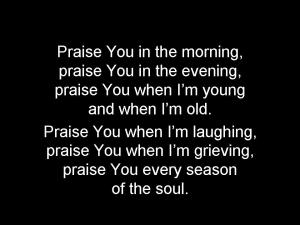
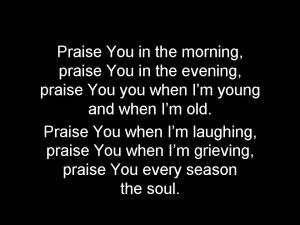
First, in this verse of Matt Redman’s “Blessed Be Your Name”, two misplaced apostrophes are the difference between a good looking slide and a slide that doesn’t meet elementary school grammar standards. The good slide is first, the bad slide is second.

Blessed Be Your Name good

Blessed Be Your Name bad

If I’m in the congregation and this slide comes up, my attention will (unfortunately) be drawn to the poor editing, not to the worthiness of God.

Here’s a second example, using verse one of another Matt Redman song, “Let Everything That Has Breath”. The first slide is correct. The second slide has two little mistakes. First, the word “you” is repeated twice in a row in one spot. Second, the word “of” is missing in the last line.

Let Everything good

Let Everything bad

These kind of mistakes can end up making people spend the whole verse trying to figure out what in the world they should be singing – and where they should be singing it!

Watch out for the little mistakes. It’s one way to care for your congregation and lead them in ways they’ll never notice. And that’s the point.

Handling Awkward Moments – Breaking a String

stringIf worship leaders (who lead from guitar) had to list their number one most-dreaded moment, breaking a guitar string would most likely be at the very top.

One moment you’re happily strumming away, oblivious to the trauma your guitar is about to inflict upon you. The next moment, in the blinking of an eye, the string has snapped, your guitar is out of tune, your face is red, your band is confused, keen-eyed congregation members are snickering, and all of the sudden it feels like you just started playing guitar about eight minutes ago.

What do you do?

Don’t freak out
This is the first and most important step. The fact that your guitar string just broke is the biggest deal in the world to you – but not nearly as important to anyone else in the room. There is nothing you can do about it now. Your string is broken. Take a deep breath and stay focused on helping people encounter God, not share in your wallowing.

Keep singing
You would be surprised at how many people in the room have no idea when you break a string, if your drummer is in 6/8 but you’re in 4/4, if your singer is clapping on beats one and three, if your bass player is playing an A instead of an F#m, etc. Either they’re not sensitive enough to the music to notice such things, or they’re (thankfully) too focused of the greatness of God to be distracted by relatively minor issues. Don’t do anything (like stop singing) to draw people’s attention to your broken string. Play it cool, lead with your voice, and pretend that part of the song’s arrangement was for you to sit out. Most guitarists could play less anyway.

Unwind the broken string while you keep singing
The broken string will dangle and rattle around against the other strings unless you do something about it. You don’t have time to be picky about what to do, so either just yank it out by the bridge or unwind it from the tuners. (Note: don’t unwind it from the tuners by turning the tuning knob. This isn’t necessary because there is no longer any tension on the string. Grab the string near the top of the tuner and unwind it until you can pull it out). Once you’ve done this, just let it fall to the floor. You can pick it up later. Do this carefully so you don’t make a lot of noise!

If the guitar is relatively in tune, keep playing
You’ll be thrown off without all six strings, but you’ll still be able to provide at least some degree of rhythm and instrumental support.

If the guitar is out of tune, stop playing
Either go a cappella or let your other instrumentalists carry the rest of the song. Depending on the strength of your other instrumentalists this could go a number of different ways. But, it’s not a good option for you to keep playing with an out of tune guitar. It will be less distracting for in-tune instrumentalists to play weakly, than out-of-tune instrumentalist to play stubbornly.

Change your string after the singing is over
If I break a string during our opening time of singing, I’ll replace it in the back room during the sermon so that it’s ready to go for the closing song. In order to do this, I’m always sure I have a full set of guitar strings in my case.

Change your strings early and often
I’m always amazed when guitarists are playing on strings that they put on eight months ago. This is not something to brag about. These strings not only sound bad, but they’re hard to play on and they’re at risk of breaking. As a preventative measure, try to avoid playing on beat-up, corroded, or old strings in a service.

Have a back-up guitar close by
Whenever I lead from the guitar, I have a back-up guitar set up, tuned, and within close reach. Yes, it’s a bit of a hassle to carry two guitars around before and after the service. It takes some extra time to get them both tuned. I only end up needing it about once every two months, at most. But when I do need it – it’s worth every bit of the hassle and more. Both guitars sit on a double guitar stand, reducing the amount of space they take up. Setting up two guitars has become part of my routine and it doesn’t seem like too much work anymore. When my string does break, I am incredibly grateful for the back-up.

Don’t think you’ve ruined the service
If you handle this awkward moment with patience and self-control, the likelihood of anyone remembering your broken string by the time Sunday dinner has rolled around is very small. Use this as an opportunity to be humbled and reminded of your total need of God’s grace. Laugh at yourself too.


Put the Music Stand Away

music_standI have a confession to make. This past weekend I came to the sad realization that I have become addicted to the music stand. I’ve become more and more dependent on it, not merely using it as a back-up, but using it as a crutch.

While leading “And Can it Be” on Saturday night I stumbled for the right chords, forgot the lyrics, and was too distracted to lead it confidently – all because I didn’t have the chord chart on the music stand in front of me. Usually if I don’t know the words I can look up at the screen, but I was too busy trying to figure out which chord came next to remember to do that!

Don’t get me wrong, it wasn’t a complete train wreck, and since I wasn’t leading all by myself, I was able to hide my blunders for the most part. But as I’ve thought more about it, I’ve realized that it was the result of a growing dependence on always having the music in front of me, leading me to become a bit lazy and unprepared. While I’m sure many people didn’t notice, some did, and they were too distracted at times by my lack of practice to focus on the amazing love of the Savior that the song talks about.

My guess is that most worship leaders struggle with this “addiction” to the music stand as well. It seems unrealistic to be able to memorize so many different songs’ music and lyrics, and risky to lead without both in front of you at all times. But what ends up happening is what happened to me on Saturday night – we sing songs off of a page, not out of our hearts. This is a problem.

It probably isn’t realistic to memorize every single song’s music and lyrics. Your brain can play funny tricks on you sometimes, and you can completely forget how a verse starts, what the chord progression is on the bridge, etc. Because of this, it probably is a good idea to have the chord charts close by.

But having said that, it should be a goal of worship leaders to lead songs from their hearts, not from a piece of paper. We will lead more effectively if we have spent time not only getting familiar with the songs we’re going to sing, but allowing the truth in them to effect our hearts. We can all tell the difference between when someone reads a speech from a piece of paper or teleprompter, and when someone speaks from their heart with conviction. It shows a genuine belief in what they’re saying. The same applies to worship leaders.

If I’m standing before a congregation, I don’t want to send the message that I’m just caught up in a piece of paper. Instead, I want to send the message that I am caught up in a beautiful Savior. To do this, I need to prayerfully and humbly seek God’s help, and devote time and energy to memorizing the songs I’m leading as best I can.

This week I’m going to try:

  • Devoting an hour or more to singing and playing through the entire service’s song list once it’s finalized.
  • During the services, only have the chord charts in front me for songs that I don’t yet know by heart. This way I won’t be tempted to look at them out of habit, even when it’s not needed.
  • Prioritizing memorizing the lyrics to all the songs. The music is less important.
  • Going through rehearsal without looking at the chord charts at all. This will show me what songs I need to work on harder.

Paul wrote in Colossians 3:16 to “let the word of Christ dwell in you richly…” Memorizing the songs we lead is one great way to do that.

Video Clip – Why Does God Command Us to Worship Him?

I’m attending the Sovereign Grace worship conference this week with several worship team members from my church. So far it’s been full of rich teaching, powerful times of corporate worship, and good time together as a team.

John Piper spoke Wednesday night on “The God of Worship” and Thursday morning on “The Heart of Worship”. I can’t even begin to summarize all that he said, but one thing that stuck out to me was when he elaborated on why God commands us to worship him. This video clip (about 7 minutes long) is a bit of what he shared about this at the conference.

When is it OK to Use Humor?

My friend Mike Payne commented on my Checking for Ticks post last week and asked: “in what circumstances, if any, is the use of humor appropriate in a worship service?

In general, the worship leader should be as invisible as possible. The more attention worship leaders draw to themselves, the less attention the congregation is giving to the greatness of God. Trying to be funny just for the sake of being funny doesn’t serve the congregation, it serves the worship leader’s ego.

Sometimes, though, worship leaders can actually serve the congregation by using humor. While I’m sure there are more, here are a few circumstances in which humor coul help:
Breaking tension or awkwardness:
If the person projecting the lyrics accidentally puts up ESPN.com instead of “How Great is Our God”, you are not going to be able to cover that up. Just laugh about it, say something short and funny, and then transition back to the song.
Cleaning up a train wreck:
Here’s a perfect example.


Addressing the elephant in the room:
If it’s pouring rain and hail is falling outside as people are coming into a service, don’t ignore it. Just say something like “good morning, thanks for swimming to church today”. It shows the congregation that you’re aware it wasn’t easy to make it, and it makes them chuckle, which helps them relax.
Helping people feel comfortable:
At our lessons and carols services this past December, I sang Andrew Peterson’s song “Matthew’s Begats” in the middle of the service, which tells the story of the family history of Jesus all the way from Abraham. If you’ve heard the song, you know that it has more of a bluegrass feel, complete with a banjo. This isn’t a style we use that often at my church, so before I sang the song I said:

“this next song is a little different from what you might be used to hearing here on a Sunday morning. We’ve even imported a banjo for this one. That may or may not be glad tidings of great joy for some of you – but… oh well! If you’re  anything like me, when we get to the genealogy of Jesus at the beginning of the Gospels, you might kind of tune out. But hopefully this next song will help us all hear it in a new way. You can stay seated for this one, and let’s hear together the genealogy of our Savior.”

I wasn’t trying to be a comedian, and I didn’t go on and on. My goal wasn’t to leave people in stitches. I just made a little joke that the song would be a bit different, and I picked on the banjo player a little bit, and it helped the congregation feel comfortable.

I don’t think it’s appropriate for a worship leader to use humor when:
A medical emergency interrupts a service:
Oftentimes the first thing a worship leader will be tempted to say if someone has a medical emergency during a service and has to be taken out is: “I guess they didn’t like my singing.” It might make people laugh, but it’s pretty insensitive. If you found out later that the person was indeed in serious trouble, you would regret making light of the situation. Instead, just lead people in a short prayer for the person, and then move on.
Someone’s cell phone goes off:
A few years ago we had finished our opening song (I think it was “All Hail the Power of Jesus Name”) and someone’s cell phone started ringing “YMCA”. I was tempted to make a joke about it, but it would have more disruptive to do that than to just let it go. A joke would have embarrassed that person even more, and if they were a visitor or a seeker, that would have been a shame.
Referring to another service:
I cringe when I hear worship leaders say things like: “you guys are singing so much better than the 8:30 service” or “are you all more awake than the last service?” It’s insulting and insensitive to everyone who attended the service you’re making fun of. Not a good idea.
To make inside jokes:
Inside jokes are fine for rehearsal or for one-on-one, but not when the congregation is listening in. They’ll feel left out, and you’ll come across as inconsiderate.

Ultimately, you really have to practice discernment and pray for wisdom. Err on the side of playing it safe unless you’re sure your humor will, in some way, serve the congregation. If you’re just trying to be funny for the sake of being funny, it’s probably a good idea to keep it to yourself.