Thinking Surgically When Leading Liturgically: A Few More Nuggets

I need to wrap this little mini-series up or else I’m going to get stuck in it forever! There’s a lot more I could say, but I wanted to offer some brief final thoughts. I really hope these few posts (part one, twothree, and four) have helped those of you who serve in churches that use a more formal liturgy. Be encouraged!

Know your place in your church’s history
Most worship leaders have the mistaken notion at one point or another that they’re the best thing to happen to their church since Jesus ascended into heaven. The fact is, you’re only going to be there for 5, 10, 15, maybe 20, and in rare cases, 30 years. Take a good, hard, and honest look at your pastor, your congregation, your church’s history, and your church’s trajectory.

Here’s one way to go about this: ask the question, “what decade is my church stuck in?” The farther back your answer, the greater likelihood that your place in your church’s history is to be a loving, pastoral, patient, and faithful prodder. The more recent your answer, the more your role becomes that of a careful chef: making sure the time-tested recipes don’t lose quality or disappear altogether as a result of the new tweaks and ingredients that keep cropping up.

Learn the “capital equation”
I hated math all throughout elementary school, junior high, high school, and college. I really did hate it. The thought of having to sit down and figure out what c equals when b is x and there is a squiggly line over a with a little 2 next to it makes me want to run in fear.

But a simple equation has made all the difference in my attempts to help a formal liturgical church grow in its expression of corporate worship.

Build capital. Spend capital. Build back capital.

Here’s an example: you want to teach your church a song that written after 1985. This is a big deal and could result in World War III. Before you teach it, you do a bunch of old favorites (i.e. build capital). Then you teach the new song (spend capital). Then you do a bunch of old favorites (build back capital).

You’re welcome.

Know when to retreat (and save your energy for when it matters)
Staying on that theme of building capital, another way to protect yourself from being viewed as the enemy who hates liturgy is to know when to sit back and let the liturgy roll. Christmas Eve is probably one of these times. Don’t waste your energy on trying to get contemporary songs included if there’s a lot of resistance. Just wait. A few years down the road it won’t be such a big deal.

Repeat after me: this will take longer than I think. This will take longer than I think.

Yes, you’re right. It will.

Guard against cynicism
The danger of becoming cynical and bitter is something that all worship leaders have to avoid. But in settings where a worship leader is dealing with a congregation that is either resistant to, unfamiliar with, or downright against their efforts, that danger is especially high.

I encourage you to pray regularly – each time you’re getting ready to lead worship, actually – that God would give you a love for your congregation. Every church has its quirks. But liturgical churches have fancy names for theirs. They take those quirks seriously and when you’re starting to push up against them, your heart can become hard towards the people if you’re not careful. Pray that God would give you a soft heart for the people you’re standing before.

Handling discouragement
One of my favorite lines from a Rich Mullins song comes toward the end of “Hold Me Jesus” when he says “I’ve beat my head against so many walls that I’m falling down, I’m falling on my knees”.

Leading worship in a church that uses a formal liturgy will certainly make you want to beat your head against a wall sometimes. If you get anything from these points, get this: the frustration and maybe even exasperation you experience at times is not yours alone. It can be difficult!

But the answer isn’t to quit your job and try to work at an easier church. The answer is to fall to your knees. Jesus will give you a love and vision for serving the people he died to save.
Thinking Surgically When Leading Liturgically: Avoiding Token Songs

In most churches that have a formal liturgy and follow some sort of prayer book for their order of service, there are certain songs that get repeated more often than others. These are songs that are actually called for in the rubrics themselves. Every church eventually finds their own version of these songs that they prefer over others, and so they may very well end up singing these songs every week in the exact same spot.

These can quickly become “token songs”. We sing them because the liturgy dictates that we do, we could probably sing them in our sleep, we’re not really engaged with the words we’re singing, and we don’t even like them very much, but they check the liturgical box and keep the liturgy watch dogs off our back. (And they do exist.)

The Gloria
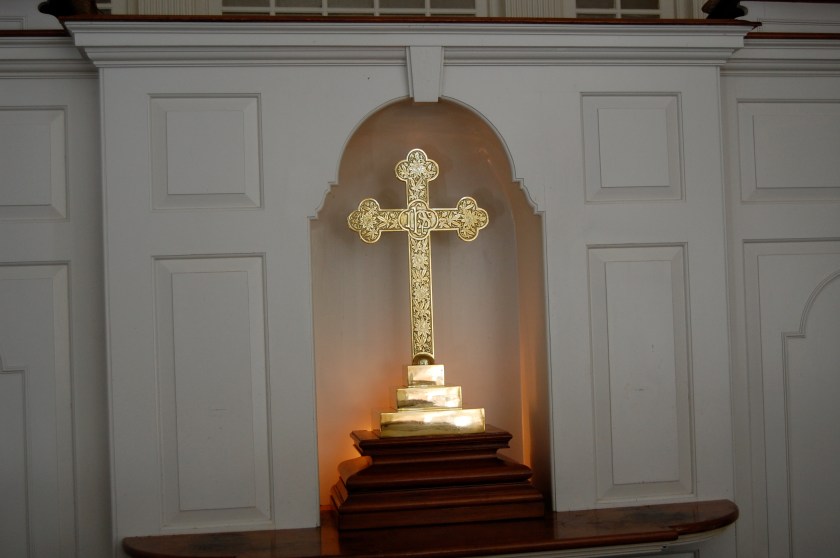
“Glory to God in the highest and peace to his people on earth. Lord God, heavenly King, Almighty God and Father, we worship You, we give You thanks, we praise You for your glory”. It goes on. This is the text to the “Gloria”, of which there are hundreds of different settings in hymnals. It’s an amazing proclamation of praise and goes back hundreds of years.

Like I said earlier, most churches who sing a Gloria end up settling on one or two versions of it, and they sing the same version every single week for a very long time. For some churches it’s like the opening theme song.

In most prayer books that I’ve seen that dictate that a Gloria should be sung, I’ve also noticed an instruction sort of like this: “When appointed, the following hymn or some other song of praise is sung or said, all standing…” Notice the phrase “or some other song of praise”.

Did you know it said that? You don’t have to sing the Gloria. You can sing some other song. There’s usually more wiggle room in prayer books than people think. It’s wonderful when you realize that.

If you sing the Gloria in your church, try replacing it with a song of praise from time to time (or every week, or once a month), or even a block of songs. In most cases, you’ll have the support of the prayer book. This helps this portion of the service not get so formulaic and predictable.

The Doxology
“Praise God from whom all blessings flow. Praise Him, all creatures here below…” In most churches that follow a more formal liturgy, this song is sung every Sunday at some point in the service, and for people who have grown up hearing it every Sunday, it can be the most meaningful song in the entire service. That’s a good thing and that’s a bad thing.

You can always count on the congregation belting out the Doxology. It’s a great, ancient text the focuses our attention on the glory of God in three persons and calls us to praise Him along with all of heaven. It’s a wonderful, wonderful song in the Church’s repertoire.

But you can also count on a song losing its power when it’s sung every single week. This is why for the services at which I lead music, we sing it once, maybe twice, a month.

This can create a logistical problem, since in many churches the congregation sits for the offertory then stands for the Doxology while the offering is brought forward. If there’s no Doxology, then when is the congregation supposed to stand and let the offering come forward?

One answer: do a song for the offertory that’s congregational and have the people stand once the collection is done and join in singing part of the song in place of a Doxology. Tell the ushers that their cue to come forward is when you ask the congregation to stand.

Easy. Now you’re keeping the Doxology from becoming a token song and you’re freshening things up a bit.

An aside: keeping a service that sticks to a formal liturgy from feeling dead is all about little changes like this. You usually can’t make a huge change. But you can work around the edges and do things here-and-there that can make a huge difference when all added up.

The Sanctus
“Holy, holy, holy Lord, God of power and might, heaven and earth are filled with your glory…” I posted some alternatives for the Sanctus several months ago and encourage you to read this post for some ideas. Don’t let this high point in the liturgy become robotic.

Agnus Dei
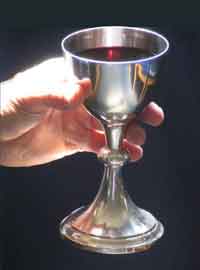
This might be referred to as something else (like a “fraction anthem”) in your church, but this is a song that is sung towards the end of the communion liturgy, after the priest has broken the bread. The traditional liturgical text is something along the lines of “Lamb of God, who takes away the sins of the world, have mercy on us.”

I have to be honest and say that in my experience, growing up liturgical churches, this is one of the greatest missed opportunities for preaching the gospel through music.

Right here, as people are preparing to come to the Lord’s Table to receive the bread and wine, and after they’ve heard the retelling of the story of Jesus instituting this Sacrament, is the perfect moment to sing the Gospel. Instead, frankly, we too often sing a dirge-like, dreary, minor-key song.

I get it – and I absolutely see that there are places for those kinds of songs and for praying for God’s mercy – but I think we serve our congregations better when we draw their attention to how God has already shown us mercy in giving us his son to take our place on the cross and receive the punishment we deserved to secure us eternal peace with God.

So instead of singing a traditional Agnus Dei, I draw from these. They each take about 1 or 2 minutes, which is the traditional length of the song in this spot. I pick and choose some verses and chorus, which I’ll detail below:

1. Here is Love Vast as the Ocean
– Traditional hymn
– Verse 1: “Here is love vast as the ocean, loving-kindness as the flood, when the Prince of Life, our ransom, shed for us his precious blood.”
– Verse 2: “On the mount of crucifixion, fountains opened deep and wide. Through the floodgates of God’s mercy flowed a vast and gracious tide.”

2. Jesus Paid it All
– Traditional hymn.
– Verse 2: “For nothing good have I, whereby thy grace to claim. I’ll wash my garments white in the blood of Calvary’s Lamb.”
– Chorus: “Jesus paid it all, all to him I owe, sin had left a crimson stain, He washed it white as snow.”
– Verse 4: “Lord, now indeed I find, thy power and thine alone can change the leper’s spots and melt the heart of stone.”

3. The Power of the Cross
– Stuart Townend and Keith Getty
– Verse 1: “Oh to see the dawn of the darkest day, Christ on the road to Calvary…”
– Chorus A: “This the power of the cross: Christ became sin for us. Took the blame, bore the wrath, we stand forgiven at the cross.”
– Verse 4: “Oh to see my name written in the wounds, for through your suffering, I am free…”
– Chorus B: “This the power of the cross: Son of God, slain for us. What a love! What a cost! We stand forgiven at the cross.”

4. Jesus Thank You
– Pat Szcebel
– Verse 1: “The mystery of the cross I cannot comprehend… You the perfect Holy One crushed your son, who drank the bitter cup reserved for me.”
– Chorus: “Your blood has washed away my sin…, the Father’s wrath completely satisfied…, once your enemy, now seated at your table, Jesus, thank you.”

5. Grace Flows Down
– David Bell, Louie Giglio, Rod Pageant
– Verse 1: “Amazing grace, how sweet the sound. Amazing love, now flowing down from hands and feet the were nailed to a tree. His grace flows down and covers me.”
– Chorus: “It covers me…”

Those are just five suggestions of alternatives to a traditional Agnus Dei. There are many more songs/hymns you can adapt for this purpose.

Go for it.

Thinking Surgically When Leading Liturgically: Owning It

My wife makes the most delicious chocolate chip cookies.
But she hasn’t always.

At one point in her life, I’m sure when she was first starting out (before I ever met her), she made some mistakes. She put too much flour in. Not enough sugar. She didn’t bake them long enough. They came out too hard. They came out too soft.

But now, they’re always perfect. Really. I wish you could taste them.

One other thing I’ve noticed is that she no longer looks at the recipe. She’s made them for me enough times that she knows the recipe by heart. In other words, she “owns” the recipe. It’s hers. It not just written down somewhere, but she knows it well and has made her own adjustments to it to make the cookies taste just right.

No one likes eating a bad cookie. When you look at it and pick it up it has such promise. Your mouth begins watering. Then you bite into it and are filled with disappointment.

It’s not the cookie’s fault that it tastes bad. It could be the person who wrote the recipe, or the person who didn’t read the recipe correctly, or the person who left them in the oven too long. But you can’t blame the cookie itself.

A good cookie is a work of art. It’s a thing of beauty. It’s something that satisfies whoever eats it. It’s the fruit of a good baker who knows his or her way around a kitchen and who owned the recipe to the point of deliciousness.

The same principle applies to liturgy.

You’ve got to own it for it to be really good.

You’ve got to get enough experience and familiarity with the different recipes and ingredients that you can put it all together and make it delicious. A worship leader is like a baker: you want to feed people something good, something Gospel-filled, something long-lasting, and you have different ingredients to work with.

Depending on your denomination/culinary style, you’ll have some ingredients that are required and some that are optional.

In my setting, in a communion service, we must follow a certain order, have a certain number of readings (one of which is the gospel reading), a sermon, prayers, offering, communion liturgy (four prayers to choose from), and closing prayer (two prayers to choose from). Our prayer book makes clear what isn’t negotiable. If we are to tinker with any of those things, it’s our pastor’s call. He’s the head chef.

But there are other things that are optional. We can sing one opening song or four. We can have songs in between the readings or no songs at all. We can have the Nicene creed directly after the sermon, or go directly into a time of prayer. The offertory song can be congregational or an anthem. We can sing many different songs as a Doxology. I can have us say or sing a Psalm or other portion of scripture during the songs. We can sing special music during communion or hymns or newer songs.

Whatever kind of church you’re serving, you’ll be more effective the more comfortable you are with the recipes. Until you are, odds are that your liturgy isn’t going to be as satisfying as it could be. There is some bad liturgy and bad theology in every prayer book, but the more comfortable you are with it, the more you’ll be able to throw in other ingredients to offset the bad and make the final product more edifying.

Become well versed in whatever liturgy source from which your church draws. Look at the different types of services (i.e. morning prayer, evening prayer, Baptism, Holy Communion, Confirmation, etc.) and look through old church bulletins to see what adaptions to the recipe have crept in. Maybe the adaptations are good. Maybe they’re not so good and you should revert back to the original!

You’ll usually find that the older versions of prayer books are more doctrinally sound than the newer. The newer the prayer book, the more watered-down and politically correct its theology, the less hard-hitting view of our sinful nature, the less central role Jesus holds, and the more wimpy its prayers. Look for versions of your church’s prayer books from 30, 50, 100 years ago, and in most cases you’ll find better ingredients and more trustworthy contributing chefs.

Last tip: pay special attention to the “mays”. As in, “a song may be sung” or “the Nicene creed may be omitted” or “the officiant may say”. It’s in these “mays” where you’ll find some wiggle room for “owning” the liturgy, making some adjustments, and keeping things from getting bland. No one likes eating a bad cookie. They deserve better.

Thinking Surgically When Leading Liturgically: Recognizing the Danger

Some people love liturgy. They can’t get enough of the stuff. The more prayers, creeds, incense, call-and-response stuff, vestments, and pageantry the better.

I am not one of those people. I like a lot of it, but I also don’t like a lot of it. I’ve lived with it all my life so it’s lost its novelty with me. I see a lot of the good, but I also see a lot of the bad. 

Some things I like (in no particular order of importance).

  • The church year. I love how it tells the story of Jesus.
  • The liturgy for the burial of the dead (i.e. a funeral). I love how it starts off with the proclamation from the back of the room: “I am the resurrection and I am Life says the Lord…”
  • The Maundy Thursday service ending with the reading in darkness of Jesus’ arrest and betrayal while all of the adornments in the church are stripped away.
  • The Easter Vigil service where the service begins in darkness with songs and readings and prayers telling the story of redemption all the way from Genesis, culminating in the great Easter acclamation and a celebration of Jesus’ resurrection.
  • The Easter acclamation: “Alleluia! Christ is risen!” to which we reply “The Lord is risen indeed. Alleluia!”
  • The prayer for purity.
  • The prayer of humble access.
  • The Gospel truth that is soaked through so much of the liturgy and prayers, to help protect the church from doctrinal error.

Some things I don’t like.

  • The robotic, monotonous, heartless repetition that it can instill in so many congregations. Amazing truths can be spoken and sung with so much familiarity that they don’t affect the heart.
  • “We can’t do ____ because the prayer book says we have to do ____.”
  • The elevation of tradition to a place of inerrancy that only Scripture should hold.
  • The pomposity that can accompany it.
  • The impression it gives that prayers should always (a) be fancifully worded and (b) professionally offered.

But if I had a choice to lead worship either at a totally non-liturgical church or a liturgical church for the rest of my life, I have to say I’d pick the latter. In spite of all the things about the liturgy that frustrate me, I think I would find myself longing for its structure after a while.

I’m in a bit of a dilemma with liturgy. I like it when it works. I don’t like it all the time. But in my church, it’s used nearly all the time, whether I happen to think it works or not!

Maybe you’re like me and you’re a liturgy-lite person. Maybe you’re the person I described who can’t get enough or it. Or maybe you can’t stand liturgy at all and just have to tolerate it.

Whatever your personal feelings for liturgy, there is a temptation that lurks: it becomes empty words, empty acts, empty rituals, empty movements, and empty prayers.

You might love liturgy or you might hate it. Or, like me, you might be confused about what you think about it. Regardless, if you’re not careful, and if your church’s leadership isn’t careful, it loses its power.

Good drivers know the dangers of driving. Good doctors know the danger of bad medicine. Good builders know the danger of their tools. Same principle applies for worship leaders. Good worship leaders know the danger of familiarity, i.e. liturgy.

So the first step towards “thinking surgically when leading liturgically” is to recognize its danger. Only then can you see its potential.

It’s not all wonderful (for those of you can’t get enough) and it’s not all terrible (for those of you who can’t stand it).

Liturgy is like a box of chocolates. Some bits of it are filled with tasty filling. Some bits are terrible. Too much of it will leave you in a coma.
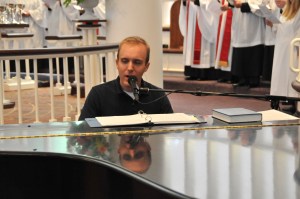
The danger is that it all becomes empty. And that’s where you come in. More later.

Thinking Surgically When Leading Liturgically

Every church has its own liturgy.

Some forms of liturgy are obvious: a book of common prayer, a prescribed order of service, processionals, the creeds, collects (corporate prayers in unison), the church year (i.e. Advent, Christmas, Epiphany, Lent, Easter, Pentecost, Ordinary time), etc.

Some forms of liturgy are less obvious: the worship leader always starts the service by inviting people to stand, the sermon is at the end, the announcements are before the sermon, we sing upbeat songs then sing slower songs, etc.

So here’s fact number one: There is no such thing as a non-liturgical church. Some are more so than others, but every church has its own customs, its own traditions, and its own normal pattern for corporate worship.

But there is a big difference between what a non-denominational service looks like when compared to a Presbyterian service. It doesn’t take a rocket scientist to figure out that some services are fairly loose and informal, while other services are more structured and formal.

And in those churches that employ a more liturgical form of corporate worship are worship leaders who are struggling with how to work within those constraints. It’s a struggle. There isn’t as much wiggle room and freedom in a highly liturgical church as there is in a “non-liturgical” church (although even those churches do have liturgy).

Here’s fact number two: it’s more difficult to lead worship in the context of a formal liturgy.

That’s a bold statement, I know. But I believe it’s true. Every church presents its own challenges, and every worship leader faces different circumstances. But speaking specifically to the exercise of leading people in corporate worship in song: it’s harder to do within the confines of formal liturgy.

I was born and raised in the Episcopal Church. Every Sunday of my life, from birth through my sophomore year of college, the service format was a by-the-book (Book of Common Prayer, that is) Holy Communion service. I know the book. I know the liturgy. And I’ve learned to love the liturgy, and see its structure not as being a constraint on my worship leading, but as providing scaffolding on which I can stand.

These next several posts are geared entirely toward people who lead worship in a church that utilizes a more formal liturgy. If you’re in a more informal church, you might not find a lot that applies to you. But if you serve in a church where the pastors are called priests, the lobby is called a narthex, your board of elders is called a Vestry, your green room is called a sacristy, your stage is called the chancel, your opening song is called a processional, you have hard-covered books of common prayer/common worship in the pews (not seats), and you know what a Sanctus is, then I hope you find some of what I have to say helpful.

So while I do believe that it’s more difficult to lead worship in the context of a formal liturgy, I want to encourage those of you who do, and help you thrive within the confines (and know when they can be broken out of).

I’ve titled this series: “thinking surgically when leading liturgically”. It’s a clever name and it rhymes, but I hope it makes a point. And that’s fact number three: you can work with the liturgy to make a service come alive.

It takes careful and prayerful planning. It takes getting familiar with the liturgy. It takes some boldness. And it takes knowing when to tinker and when not to tinker. But it can work. Liturgy doesn’t have to be a force of lethargy and robotic deadness in your services.

Your congregation can experience vibrant, Christ-centered worship in a liturgical setting. It’s more difficult, but it’s possible. Trust me. Tomorrow we’ll start looking at how.