Don’t Overreact to Minor Course Corrections

I have a love/hate relationship with paddling a canoe. On the one hand I enjoy spending a warm summer day on a river or a lake with friends and family, having a picnic on the shore, and gliding through the water, but on the other hand I don’t enjoy the prospect of tipping over, the sore arms, and trying to maneuver the canoe and make it go where I want it to go. Just when it starts to head in the right direction, it veers left and I have to paddle hard on the right, or vice versa. I’m constantly paddling on different sides in hopes of correcting course.

Growing as a worship leader is a bit like paddling a canoe. You know what general direction you want to go in (hopefully), you know the basics of how to get there, you have some knowledge of what you need to do, you know that a good deal of responsibility has been entrusted to you, at certain points all you’re trying to do is keep from sinking, you can get discouraged when you see other people around you having an easier time, and it’s not as easy at it looks.

Another similarity between growing as a worship leader and paddling a canoe is that worship leaders are constantly in need of minor course corrections. From time to time you might get totally flipped around or capsize and need major help. But most of the time, you’re doing a pretty good job of doing what you need to do, and you just need to periodically adjust your course so that you don’t collide with a tree.

Minor course corrections can come in many forms for worship leaders. Here are some ways I’ve received these little nudges from time to time:

  • My wife telling me that I looked frustrated when I led an unresponsive group of people
  • My brother letting me know that I had a bad habit of glaring at musicians when they made a mistake
  • My pastor cautioning me that when I interjected in-between lines of a song I could sometimes sound bossy
  • A friend warning me that I was trying to force change too quickly
  • A worship team member mentioning that we were doing too many similar-sounding songs from the same writer
  • A mentor telling me that I shouldn’t be so timid when I spoke
  • A sound engineer pointing out that I was over-playing and singing flat

It can be awfully tempting to overreact to minor corrections as if they mean we are terrible worship leaders, we have no idea what we’re doing, and we should just give up. But that’s silly. It would be a like a man paddling a canoe, realizing he’s drifting towards the bank, and then instead of simply correcting his course and continuing forward, he calls his wife to tell her he loves her one last time. That’s an overreaction.

There are definitely times someone gives you advice, and it’s bad advice. And there are times you receive criticism and you just need to ignore it. But God oftentimes uses people who know us to give input into how we can grow. The next time someone approaches you and suggests a way you might be to improve as a worship leader, don’t overreact. Ask yourself: “is this a minor course correction?” Most of the time it is. When we ignore these kinds – we end up in need of more serious help.

When you sign up to be a worship leader, answering God’s call on you to serve the church in this way, understand that you’re embarking on a never-ending journey of growing, maturing, gaining experience, making mistakes, receiving correction, keeping your eyes on Jesus, adjusting your course from time to time, and the occasional capsize. It’s not always easy, but God is always faithful. Keep paddling.
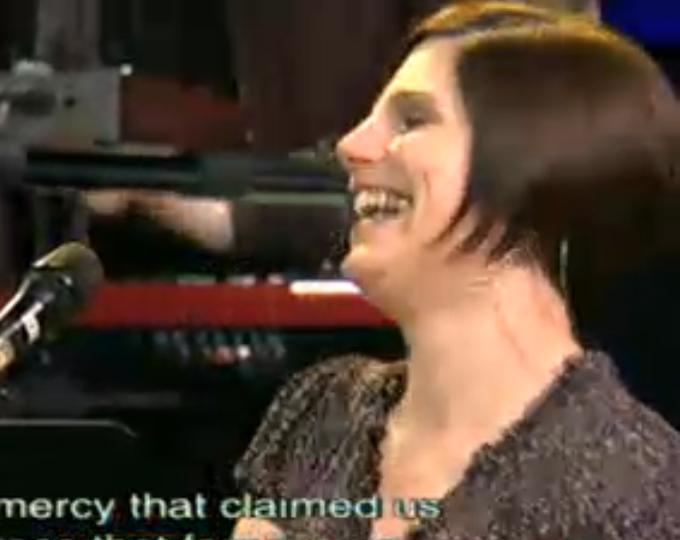
The Many Smiling Faces of Kathryn Scott

Those who look to him are radiant, and their faces shall never be ashamed.” (Psalm 34:5)

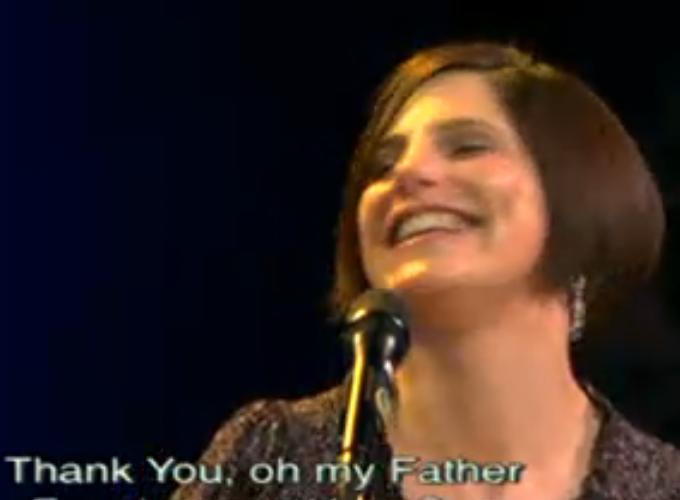
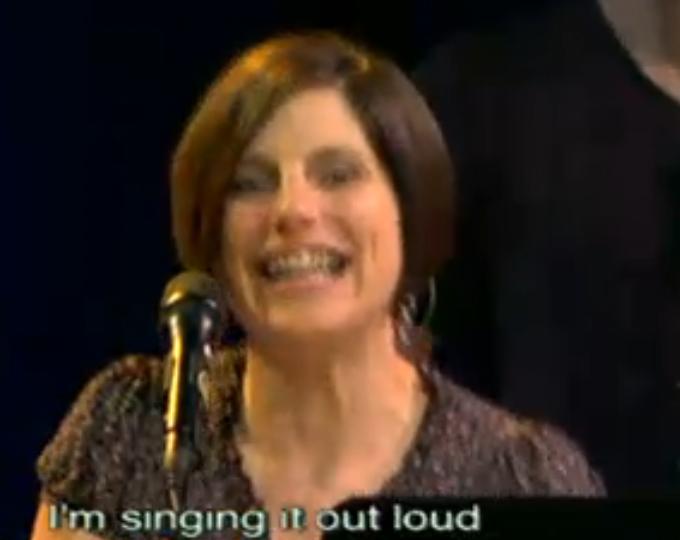
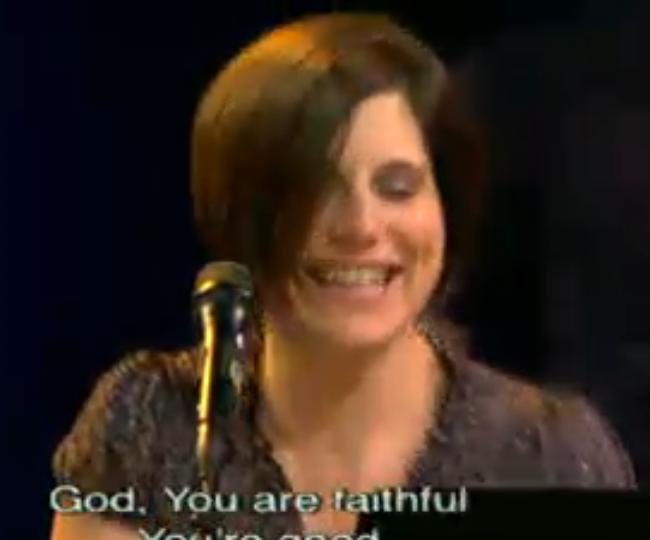
A few weeks ago I was watching a worship service online that had Kathryn Scott as the guest worship leader. I’ve always enjoyed her songs (she’s best known for her song “Hungry (Falling On My Knees)”) but had never seen her lead worship before.

I was struck by the joy, enthusiasm, and smiling that permeated her leadership. Here are a few snapshots:

I’ve been told that I oftentimes look really intense, sometimes a bit angry, when I lead worship. I could learn a lot from Kathryn’s genuinely joyful example. What a difference it makes and what a message it sends!

Don’t be fake when you’re up front – plastering on a smile or putting on an act. Worship God genuinely and whole-heartedly, and model to your congregation God-centered worship.

But remember that what we’re celebrating and proclaiming each week is that God has rescued sinners through Jesus Christ – this is the Gospel, this is “good news” – and it’s worth smiling about!

Do You Take Requests?

Tonight is the monthly men’s ministry gathering at my church, when about 100 or so guys get together for some food, a time of corporate worship, teaching, and prayer. I usually lead about 20 minutes of singing at the beginning of the meeting, and try to pick songs that men from the various different services will know, or learn easily.
This happens to be a very busy week, with a bishop visiting this weekend for baptisms and confirmations, Palm Sunday the following weekend, then Easter, then Student Sunday, then a big conference in mid-April, and then finally a little break in about five weeks. I’m happy to lead a few songs tonight, but don’t have an awful lot of time to devote to choosing songs.

So I was quite glad to receive two emails this morning – one from the guy who will be playing piano, and one from the speaker – each requesting a particular song for tonight.

My pianist requested “I Come by the Blood” by Steve and Vikki Cooke, and the speaker requested “Give Us Clean Hands” by Chris Tomlin, Both good songs, both familiar, and both seem like they’ll work well tonight. 

There are days like today when I’m very glad to take song requests and, since they’re requesting good songs, go ahead and use them. The guys who requested them will feel honored, I have two less songs to have to pick, I’m trusting that God is using their good suggestions to guide my selection of songs, and praying that God uses these songs for his glory.

But there are also days when I get an email or a phone call or a request after church when someone asks me to use a song that I don’t particularly like. Most of the time it’s because the lyrical content isn’t great, but sometimes it’s more a subjective response and I just don’t like it.

What do you do when you get song requests?

If the song they’re requesting has bad theology, or wouldn’t work in your specific setting, I’d just thank them for their suggestions, encourage them to share suggestions any time they want, but be specific (and brief) and kind about why you don’t think you’ll use that song.

But if the song they’re requesting is a fine song and you just don’t happen to like it, I would thank them, encourage them to share more suggestions, and then either go ahead and use the song, or just tell them you’ll keep it in mind. I’ve gotten suggestions for songs that I haven’t liked at the time, but eventually I warm up to the song, or a service comes along when their suggested song would actually work really well.

Just because someone asks for a song doesn’t mean you have to do it. But when you get a request, honor the person by seriously considering it and letting them know what you think. And if you’re like me, and you get two good requests in one day, your life will be a little easier.

Calling it Out


Far too many worship teams, choirs, and entire music ministries are riddled with pride. Competition, territories, and non-negotiables abound.

“How come Sally gets to sing once every 2 weeks, but I only get to sing every 2 months?”

“This worship team is the only reason why people come to this service.”

“I have played trumpet on this team since long before this worship leader got here, and I’ll be playing on this team long after he leaves.”

“Our choir is what holds this church together. If we weren’t here, half the church would leave.”

“Don’t mess with our services They’re fine the way they are.”

“I’m the best guitarist in the church.”

I am increasingly convinced that one of my roles as a worship leader, and as someone who oversees the worship teams at my church, is to foster an atmosphere in which two things happen: First, pride is not tolerated, and second, pride is called out.

We talk about it. We laugh at it. We say how silly it is. We pray that God would point out evidences of it in our lives. We don’t dance around it and pretend it’s not there, while year after year it festers and grows and eventually chokes the life out of our ministry. We call it out.

Most of the time “calling it out” happens in an intentionally humorous manner. If God “mocks proud mockers” (Proverbs 3:34), then it seems to make sense that we would also view pride as deserving mocking. At our monthly meetings, or in rehearsals, I’ll just try to find ways to poke fun at my sinful desire to be the best, and good-naturedly joke with instrumentalists and singers in a way that encourages not taking ourselves too seriously.

Other times, I’ll call it out in a more serious way, since the warning that “God opposes the proud” (James 4:6) should cause us to take pride seriously. I want to communicate to the worship team three things: First, I struggle with this, and you all struggle with this; second, here are some specific ways we might be tempted to embrace pride as musicians; and third, here are some general ways we’re all tempted to embrace pride as sinful human beings.

Once you call it out – get it out in the open, name it, and expose how destructive and petty pride really is – you can explain why it can’t be tolerated.

The worship leader, choir director, or pastor who’s afraid to address the problem of pride is contributing to an atmosphere in which God’s glory becomes less and less of a priority. I encourage you to call pride out – most of the time gently, sometimes sternly, but always firmly.